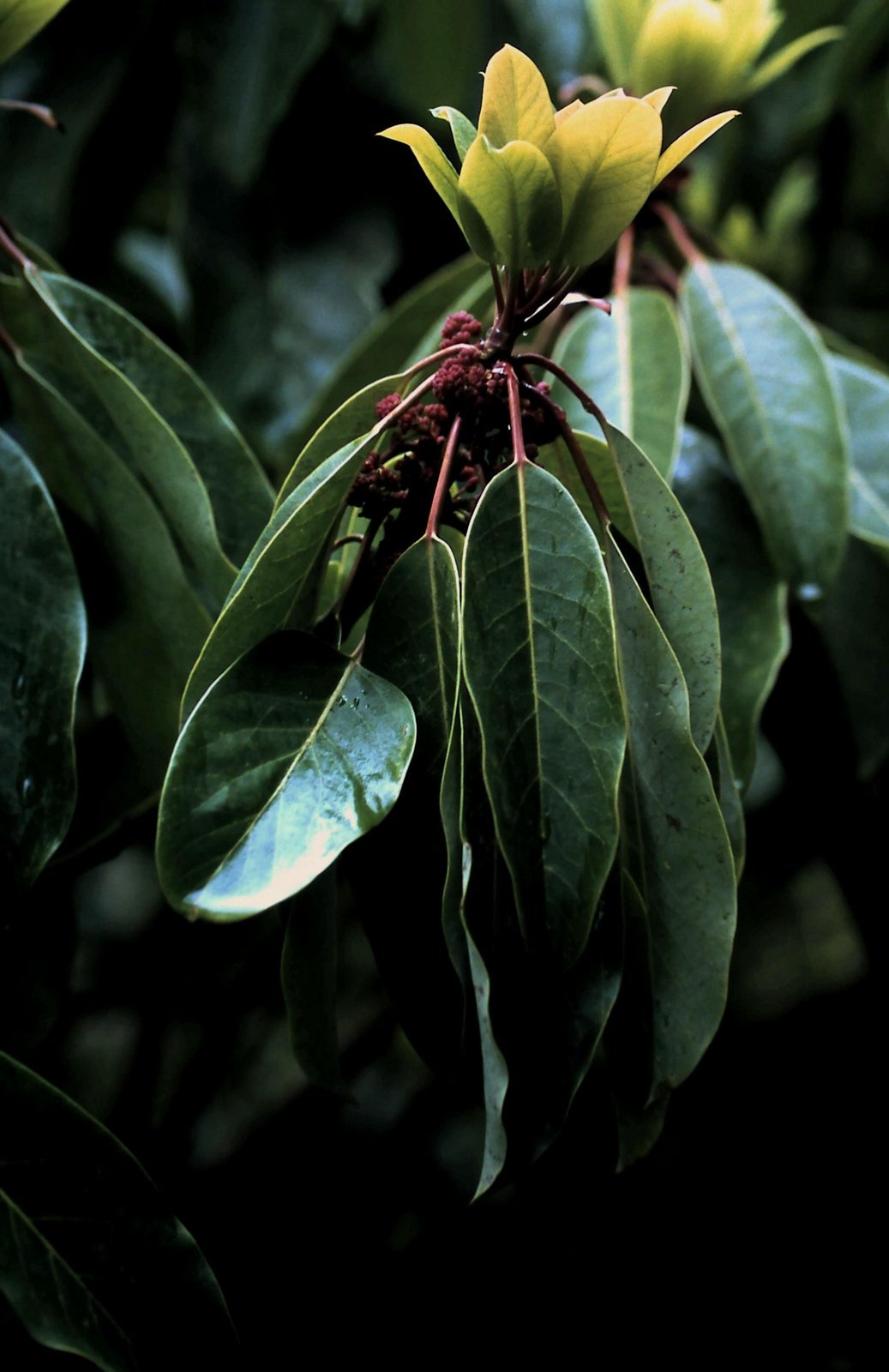
Daphniphyllum macropodum

RHS Plant Profile
large-stalked daphniphyllum
large-stalked daphniphyllum Wolfgang Bopp

Synonyms

Daphniphyllum glaucescens misapplied
Daphniphyllum himalaense subsp. macropodum

Shrubs

A large, evergreen shrub to about 6m high and wide with dark green, glossy, rhododendron-like leaves that tend to droop in winter, revealing the bright red leaf stalks. Young spring foliage is pale green, often flushed pink. Red male and green female petal-less flowers are borne on separate plants in late spring. Pollinated female plants produce heavily-bloomed black berries in autumn

Position

Full sun, Partial shade

Soil Types

Chalk, Clay, Loam, Sand

Max Height

4-8 metres

Max Spread

4-8 metres

Size

Time to Maturity
10–20 years
Max Spread
4-8 metres
Max Height
4-8 metres

Growing Conditions

Chalk Clay Loam Sand
Moisture
Moist but well–drained
pH
Acid or Alkaline or Neutral

Position

Full sun Partial shade
Aspect
South–facing or West–facing or East–facing
Exposure
Sheltered
Hardiness
H4

Colour & Scent

Fragrance Flower
Season Stem Flower Foliage Fruit
Spring
Summer
Autumn
Winter

Botanical Details

Family
Daphniphyllaceae
Native to GB/Ireland
No
Foliage
Evergreen
Habit
Bushy
Genus
Daphniphyllum are evergreen trees and shrubs with handsome, rhododendron-like, foliage in whorls at the ends of shoots. Inconspicuous male and female flowers grow on separate plants, and the fruit are fleshy and rounded
Name Status
Correct
Plant Range
Japan, Korea, China

How to Grow

Cultivation

Grow in deep, fertile, humus-rich, moist but well-drained soil in sun or semi-shade, protected from cold, drying winds

Propagation

Propagate by seed, or by semi-ripe cuttings in late summer

Suggested planting locations and garden types

  • Cottage and informal garden
  • Low Maintenance

Pruning

Pruning group 8

Pests

Generally pest-free

Diseases

Generally disease-free