Primula 'John Fielding' (Pr)
primula 'John Fielding'
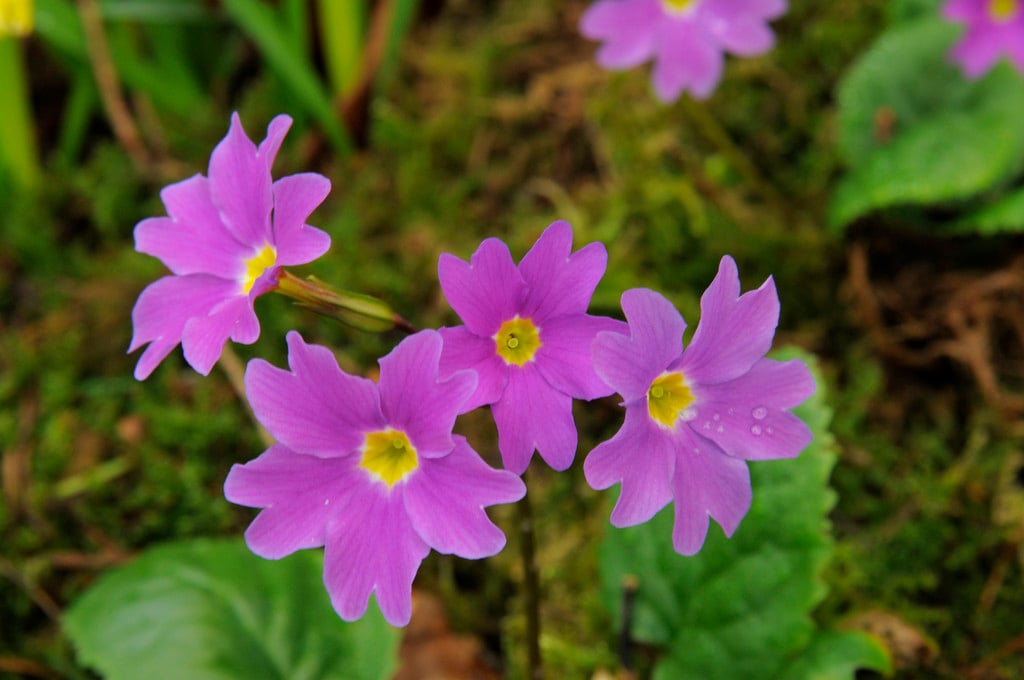
'John Fielding' is a rosette-forming, semi-evergreen primula up to 15cm, with rich green leaves. Magenta-pink flowers with notched petals are produced in small clusters all spring, sometimes starting in late winter, or going on into early summer
Size
Ultimate height
0.1–0.5 metresTime to ultimate height
2–5 yearsUltimate spread
0.1–0.5 metresGrowing conditions
Moisture
Moist but well–drainedpH
Acid, Alkaline, NeutralColour & scent
| Stem | Flower | Foliage | Fruit | |
| Spring | Pink | Green | ||
|---|---|---|---|---|
| Summer | Pink | Green | ||
| Autumn | Green | |||
| Winter | Pink | Green |
Position
- Full sun
- Partial shade
Aspect
West–facing or South–facing or East–facing
Exposure
Exposed or Sheltered Hardiness
H7Botanical details
- Family
- Primulaceae
- Native to GB / Ireland
- No
- Foliage
- Evergreen
- Habit
- Clump forming
- Genus
Primula are herbaceous or semi-evergreen perennials, forming a basal rosette of simple leaves, with salver-shaped or bell-shaped flowers which may be solitary or carried in an umbel or in whorls on an erect stem
- Name status
Accepted
- Horticultural Group
- Primula section primulas can be evergreen or herbaceous perennials, forming a rosette of oblong or obovate leaves and with clusters or umbels of salver-shaped flowers in winter or spring
How to grow
Cultivation
Grow in full sun or partial shade in moderately fertile, moist but well-drained, humus-rich soil. May also be grown under glass in an alpine house or cold frame in a mix of equal parts peat-free. loam-based potting compost, leaf mould or peat-substitute and grit
Propagation
Propagate by division in autumn or after flowering
Suggested planting locations and garden types
- Coastal
- Rock garden
- City and courtyard gardens
- Cottage and informal garden
- Patio and container plants
- Low Maintenance
- Banks and slopes
- Flower borders and beds
- Underplanting of roses and shrubs
Pruning
No pruning required
Pests
May be susceptible to aphids, glasshouse red spider mite, leafhoppers, vine weevil and slugs
Diseases
May be susceptible to primula brown core and grey moulds
Get involved
The Royal Horticultural Society is the UK’s leading gardening charity. We aim to enrich everyone’s life through plants, and make the UK a greener and more beautiful place.