Euphorbia leuconeura

RHS Plant Profile
white-veined spurge
white-veined spurge John Fielding
Cactus Succulent Shrubs

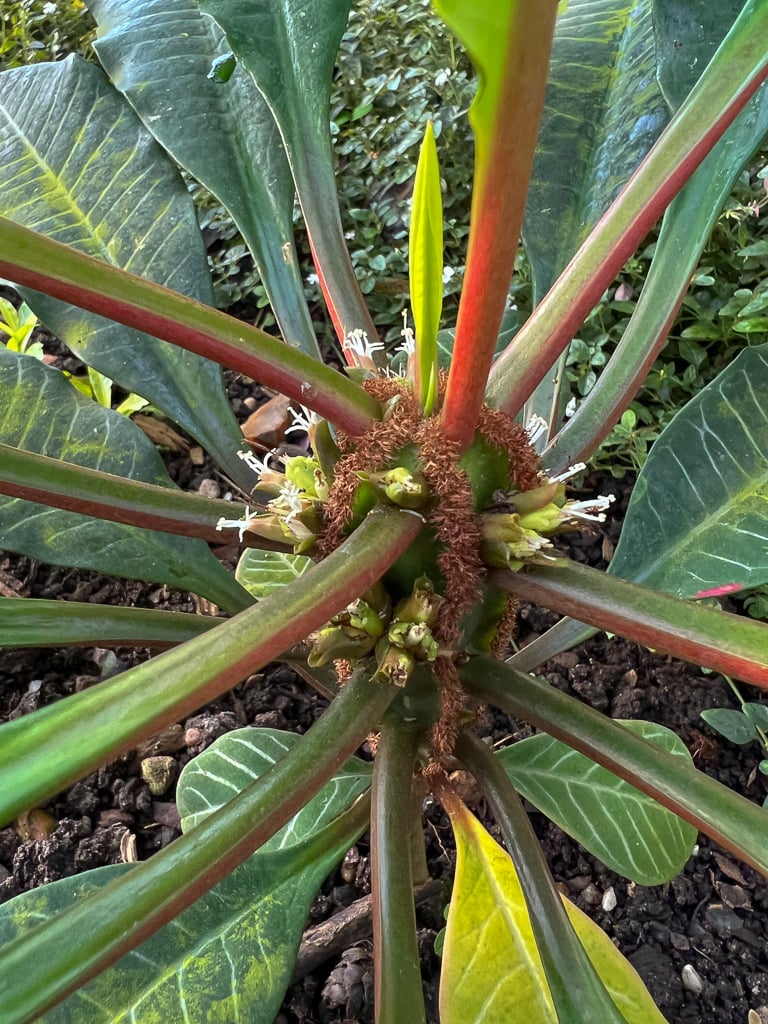
A tropical, succulent shrub capable of reaching 1.8m (6ft) and 1m (39in) across. Young plants' stems are cylindrical but mature to four or five sided stems the edges of which are covered in dense brown bristles. In bright sunlight the leaf stalks and leaf margins can take on a reddish tinge. The young foliage is dark green and prominently white veined, forming a herringbone pattern while older foliage becomes all green. Clusters of small, insignificant white flowers without petals, from red buds, are produced in the leaf axils at the tips of the stems on mature plants in spring. Suitable for growing as a feature plant indoors, or a warm greenhouse or conservatory

Position

Full sun, Partial shade

Soil Types

Loam, Sand

Max Height

1.5-2.5 metres

Max Spread

0.5-1 metres

Size

Time to Maturity
5–10 years
Max Spread
0.5-1 metres
Max Height
1.5-2.5 metres

Growing Conditions

Loam Sand
Moisture
Well–drained
pH
Acid or Alkaline or Neutral

Position

Full sun Partial shade
Aspect
South–facing or West–facing or East–facing
Exposure
Sheltered
Hardiness
H1A
Drought Resistance
Yes

Colour & Scent

Season Stem Flower Foliage Fruit
Spring
Summer
Autumn
Winter

Botanical Details

Family
Euphorbiaceae
Native to GB/Ireland
No
Foliage
Evergreen
Habit
Bushy
Potentially harmful
Humans/Pets: IRRITANT to skin/eyeharmful if eaten. Wear gloves and other protective equipment when handling. For further information and contact numbers regarding pets, see the HTA guide to potentially harmful plants
Genus
Euphorbia can be annuals, perennials, shrubs or succulents, with milky sap and small flowers held within cupped, often colourful bracts
Name Status
Correct

How to Grow

Cultivation

Grows best in well-drained soil, in full sun to partial shade and temperatures no lower than 15˚C (60˚F). See houseplant cacti and succulent cultivation for further details

Propagation

Propagate by seed or by cuttings in spring or early summer; dip cut surfaces in charcoal or lukewarm water to prevent bleeding

Suggested planting locations and garden types

  • Houseplants
  • Patio and container plants
  • Conservatory and greenhouse

Pruning

Prune when required to reduce size in early spring

Pests

May be susceptible to mealybugs

Diseases

Generally disease-free