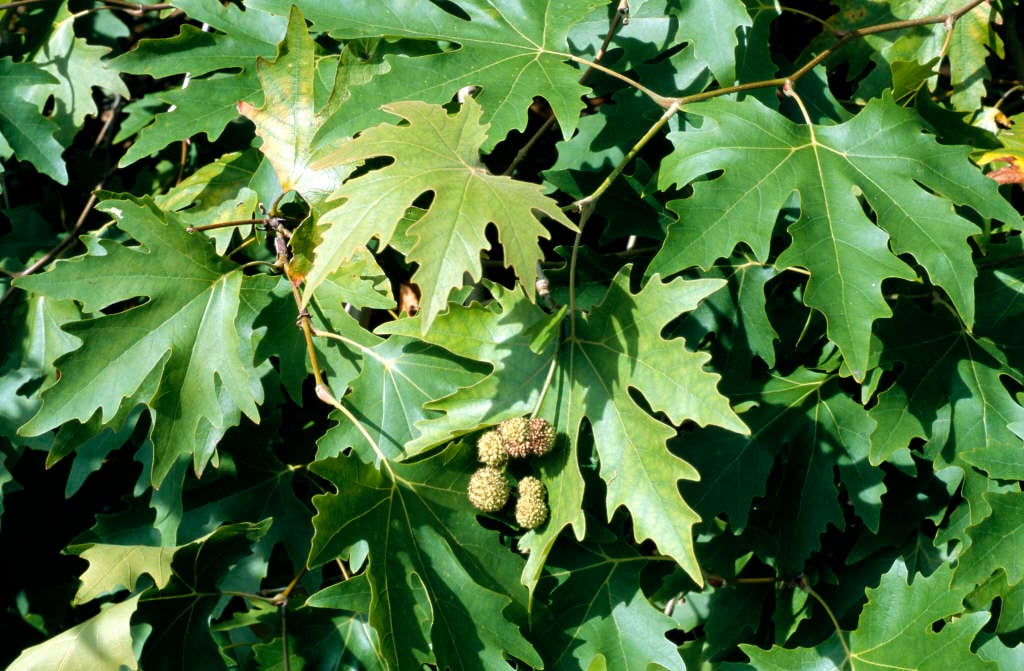
Platanus orientalis

RHS Plant Profile
oriental plane
oriental plane RHS 2002

Other common names

chinar tree, eastern plane

Trees

A very large, spreading deciduous tree with a short trunk and flaking bark. Leaves deeply palmately-lobed; flowers inconspicuous, followed by clusters of burr-like fruits

Position

Full sun

Soil Types

Chalk, Clay, Loam, Sand

Max Height

Higher than 12 metres

Max Spread

wider than 8 metres

Size

Time to Maturity
20–50 years
Max Spread
wider than 8 metres
Max Height
Higher than 12 metres

Growing Conditions

Chalk Clay Loam Sand
Moisture
Well–drained
pH
Acid or Alkaline or Neutral

Position

Full sun
Aspect
North–facing or South–facing or West–facing or East–facing
Exposure
Exposed or Sheltered
Hardiness
H6
Drought Resistance
Yes

Colour & Scent

Season Stem Flower Foliage Fruit
Spring
Summer
Autumn
Winter

Botanical Details

Family
Platanaceae
Native to GB/Ireland
No
Foliage
Deciduous
Habit
Columnar upright
Genus
Platanus are vigorous, large deciduous trees of stately appearance, with maple-like foliage and attractively patterned bark
Name Status
Correct
Plant Range
S Europe, SW Asia

How to Grow

Cultivation

Easy to grow in moist, humus-rich, fertile soils but avoid planting in vacinity of buildings due to vigorous root system

Propagation

Propagate from hardwood cuttings in winter or suckers in autumn or late winter

Suggested planting locations and garden types

  • Mediterranean climate plants
  • Low Maintenance
  • Hedging and screens

Pruning

Pruning group 1

Pests

May be susceptible to lace bugs

Diseases

May be susceptible to plane anthracnose and honey fungus