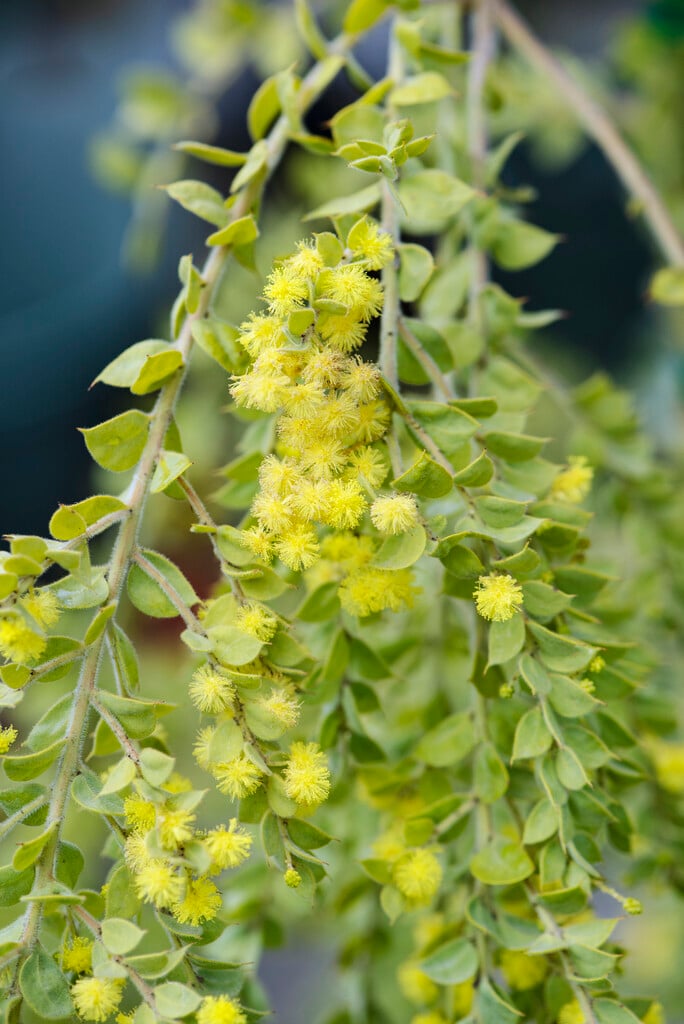
Acacia vestita

RHS Plant Profile
hairy wattle
hairy wattle visionspictures.com

Other common names

hairy wattle, weeping boree

Plants for pollinators
Shrubs

An evergreen shrub featuring soft, grey-green, feathery foliage and elegant arching branches. In late winter to spring, it bursts into clusters of bright golden-yellow, ball-shaped flowers that attract pollinators. Hardy and drought-tolerant, it thrives in full sun and well-drained soil, making it ideal for ornamental gardens and screening

Position

Full sun, Partial shade

Soil Types

Clay, Loam, Sand

Max Height

2.5-4 metres

Max Spread

2.5-4 metres

Size

Time to Maturity
10–20 years
Max Spread
2.5-4 metres
Max Height
2.5-4 metres

Growing Conditions

Clay Loam Sand
Moisture
Well–drained
pH
Acid or Alkaline or Neutral

Position

Full sun Partial shade
Aspect
East–facing or South–facing or West–facing
Exposure
Sheltered
Hardiness
H3
Drought Resistance
Yes

Colour & Scent

Season Stem Flower Foliage Fruit
Spring
Summer
Autumn
Winter

Botanical Details

Family
Fabaceae
Native to GB/Ireland
No
Foliage
Evergreen
Habit
Columnar upright, Pendulous weeping
Genus
Acacia can be deciduous or evergreen trees, shrubs or climbers, with alternate, pinnately divided leaves or simple modified leaf-like stalks (phyllodes), and tiny, sometimes fragrant, flowers in short spikes, or in racemes or spikes of spherical heads
Name Status
Correct

How to Grow

Cultivation

Grow outdoors in neutral to acid well-drained soil in sheltered location with full sun to partial shade. Suits courtyard and urban gardens in milder locations, but will need winter protection during early years elsewhere. Under glass, grow in peat-free, ericaceous or loam-based compost in full light. Resents hard pruning

Propagation

Propagation is relatively easy by normal seed raising methods following pretreatment by soaking in boiling water or by scarification. Propagation from cuttings may also be successful

Suggested planting locations and garden types

  • Architectural
  • City and courtyard gardens
  • Mediterranean climate plants
  • Wildlife gardens

Pruning

pruning group 1 light trim after flowering

Pests

May be susceptible to glasshouse red spider mite, fluted scale and mealybugs

Diseases

May be susceptible to honey fungus