Capsicum annuum var. annuum (Grossum Group) 'Ariane'
sweet pepper 'Ariane'
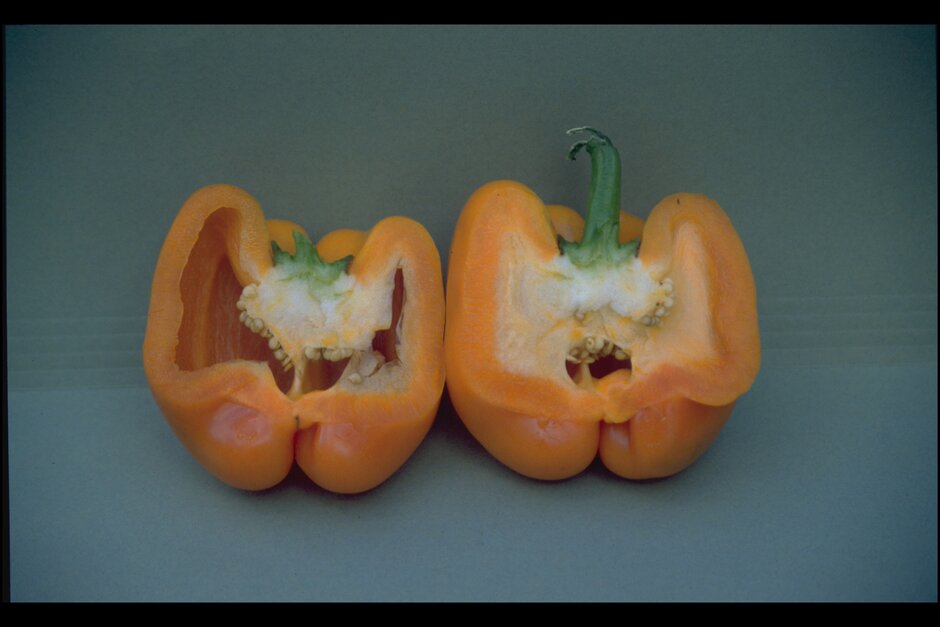
A vigorous, fast-growing, early-cropping F1 hybrid, up to 60cm high, with an open habit, with thick-walled, very sweet fruits up to 10cm long, which ripen to deep orange, sometimes with green streaks. Sweet bell peppers, Capsicum annuum var. annuum (Grossum Group), are bushy annuals with ovate to lanceolate green leaves up to 12cm long, and white starry flowers in summer followed by bell-shaped, glossy fruits which turn from green to yellow, orange, or red.
Size
Ultimate height
0.1–0.5 metresTime to ultimate height
1–2 yearsUltimate spread
0.1–0.5 metresGrowing conditions
Moisture
Moist but well–drainedpH
Acid, NeutralColour & scent
| Stem | Flower | Foliage | Fruit | |
| Spring | Green | |||
|---|---|---|---|---|
| Summer | White | Green | Orange Green | |
| Autumn | Green | |||
| Winter |
Position
- Full sun
Aspect
South–facing or West–facing
Exposure
Sheltered Hardiness
H1CBotanical details
- Family
- Solanaceae
- Native to GB / Ireland
- No
- Foliage
- Deciduous
- Habit
- Bushy
- Genus
Capsicum are annual or perennial plants, with simple, alternate leaves, and tubular or bell-shaped flowers. They are grown for their glossy, many-seeded edible fruits, including chilli and bell peppers, and as indoor ornamental plants
- Name status
Accepted
How to grow
Cultivation
Grow under glass in free-draining compost, with good light and humidity, and keep temperature above 15ºC, and water little and often to keep compost moisture even; peppers will do best under glass, but can also be grown outside from early summer after all danger of frost has passed, in fertile, well-drained but moisture-retentive, slightly acidic soil, in a warm, sunny, sheltered position; once the first fruit has set, feed plants once a week with a high-potassium liquid fertilizer; harvest fruits from late summer to early autumn; for more advice, see pepper cultivation
Propagation
Propagate by seed. See sowing vegetable seeds or sowing seeds indoors for further advice
Suggested planting locations and garden types
- Cottage and informal garden
- City and courtyard gardens
- Patio and container plants
- Wall side borders
- Edible fruit
Pruning
No pruning required
Pests
May be susceptible to aphids, red spider mites, and whitefly
Diseases
May be susceptible to grey moulds, Verticillium wilt and Sclerotinia
Get involved
The Royal Horticultural Society is the UK’s leading gardening charity. We aim to enrich everyone’s life through plants, and make the UK a greener and more beautiful place.