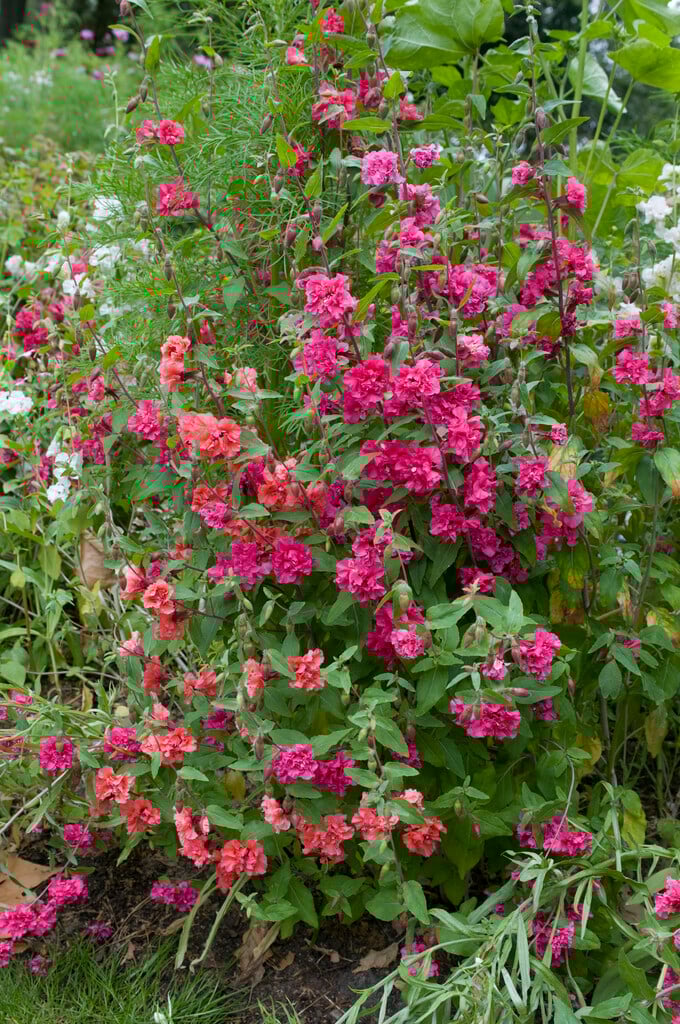
Clarkia unguiculata

RHS Plant Profile
elegant clarkia
elegant clarkia visionspictures.com

Other common names

butterfly flower, flower of love, swan flower

Synonyms

Clarkia elegans

Plants for pollinators
Annual Biennial

An upright, branching annual up to 1m high, with slender stems bearing sparse lance-shaped leaves. In late spring and early summer, flowers are produced from the upper leaf axils, with four widely-spaced, paddle-shaped petals in shades of pink, purple, red and occasionally white, and prominent stamens tipped with bright red anthers

Position

Full sun, Partial shade

Soil Types

Loam, Sand

Max Height

0.5-1 metres

Max Spread

0.1-0.5 metres

Size

Time to Maturity
1 year
Max Spread
0.1-0.5 metres
Max Height
0.5-1 metres

Growing Conditions

Loam Sand
Moisture
Moist but well–drained or Well–drained
pH
Acid

Position

Full sun Partial shade
Aspect
East–facing or South–facing or West–facing
Exposure
Exposed or Sheltered
Hardiness
H6

Colour & Scent

Season Stem Flower Foliage Fruit
Spring
Summer
Autumn
Winter

Botanical Details

Family
Onagraceae
Native to GB/Ireland
No
Foliage
Deciduous
Habit
Columnar upright
Genus
Clarkia are slender annuals with simple leaves and showy funnel-shaped or bowl-shaped flowers in lax racemes in summer
Name Status
Correct
Plant Range
California

How to Grow

Cultivation

Grow in moderately fertile, slightly acid soil in sun or part shade. Some drought tolerance, dislikes hot and humid conditions. Rich soils will encourage growth of foliage at the expense of flowers

Propagation

Propagate by seed, sown in-situ in early spring or autumn, avoid transplanting. Protect autumn-sown seedlings over winter with cloches

Suggested planting locations and garden types

  • Cottage and informal garden
  • Gravel garden
  • Wildflower meadow
  • Wildlife gardens
  • City and courtyard gardens
  • Coastal
  • Cut flowers
  • Flower borders and beds

Pruning

Cut back after flowering

Pests

Generally pest-free

Diseases

May be susceptible to foot, root and stem rot and downy mildews