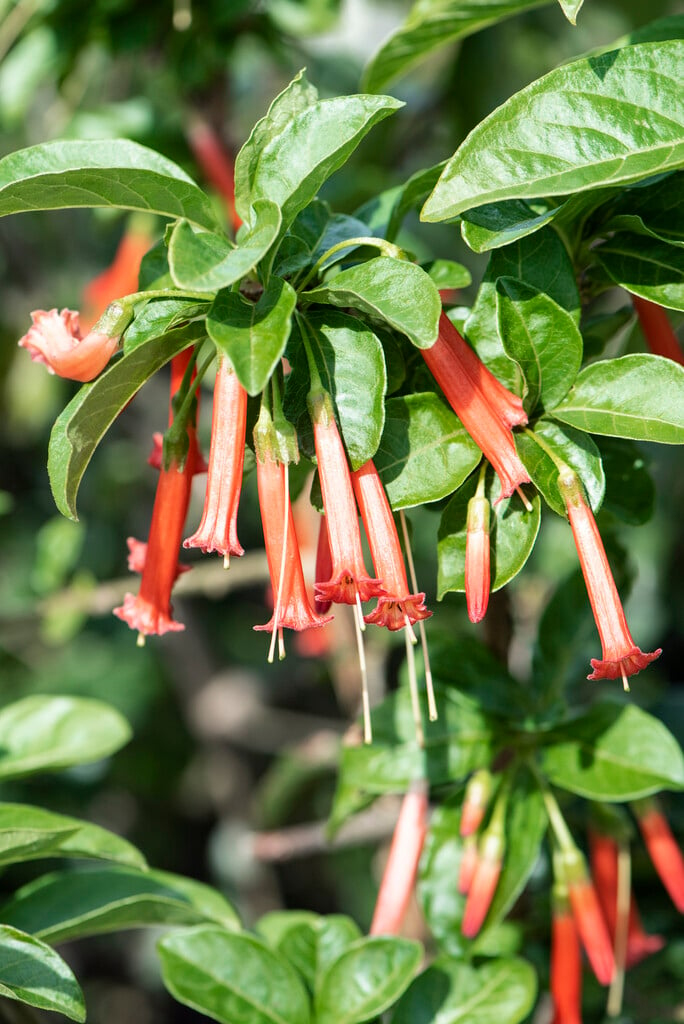
Iochroma fuchsioides

<em>Iochroma</em> <em>fuchsioides</em> visionspictures.com
Herbaceous Perennial

A fast-growing, deciduous to semi-evergreen perennial, related to Brugmansia, with green foliage, best suited to a conservatory or greenhouse but can be grown outside against a sheltered wall. Clusters of long, trumpet-shaped flame-red flowers appear from May to July

Position

Full sun

Soil Types

Loam, Sand

Max Height

2.5-4 metres

Max Spread

2.5-4 metres

Size

Time to Maturity
1–2 years
Max Spread
2.5-4 metres
Max Height
2.5-4 metres

Growing Conditions

Loam Sand
Moisture
Moist but well–drained
pH
Acid or Alkaline or Neutral

Position

Full sun
Aspect
South–facing or West–facing
Exposure
Sheltered
Hardiness
H3
Drought Resistance
Yes

Botanical Details

Family
Solanaceae
Native to GB/Ireland
No
Foliage
Deciduous, Semi evergreen
Habit
Bushy
Genus
Iochroma are evergreen or deciduous shrubs or small trees, with simple, pointed, oval leaves. The nodding or hanging tubular or trumpet-shaped flowers may be purple, blue, red, white or yellow and are followed by pulpy berries enclosed in a large calyx
Name Status
Correct
Plant Range
Andes

How to Grow

Cultivation

Grow in moist, but well-drained soil in bright, filtered light, in a conservatory or greenhouse, although will tolerate some shade. Allow soil to dry out between waterings. If grown outside, plant in a sheltered part of the garden against a warm, sunny wall. Suitable for pots and containers which can be brought into a conservatory or greenhouse over winter

Propagation

Propagate by root cuttings or propagate by seed sown in fine, well-draining potting compost. Place pots in a warm room in filtered sunlight - germination will normally take aroudn 6 weeks

Suggested planting locations and garden types

  • City and courtyard gardens
  • Cottage and informal garden
  • Patio and container plants
  • Conservatory and greenhouse
  • Wall side borders

Pruning

Prune lightly after flowering to keep neat, but can be cut back hard, even to ground level, to encourage a compact shape and bushy habit

Pests

May be susceptible to glasshouse red spider mite, glasshouse whitefly and mealybugs

Diseases

May be susceptible to Fusarium wilt and verticillium wilt