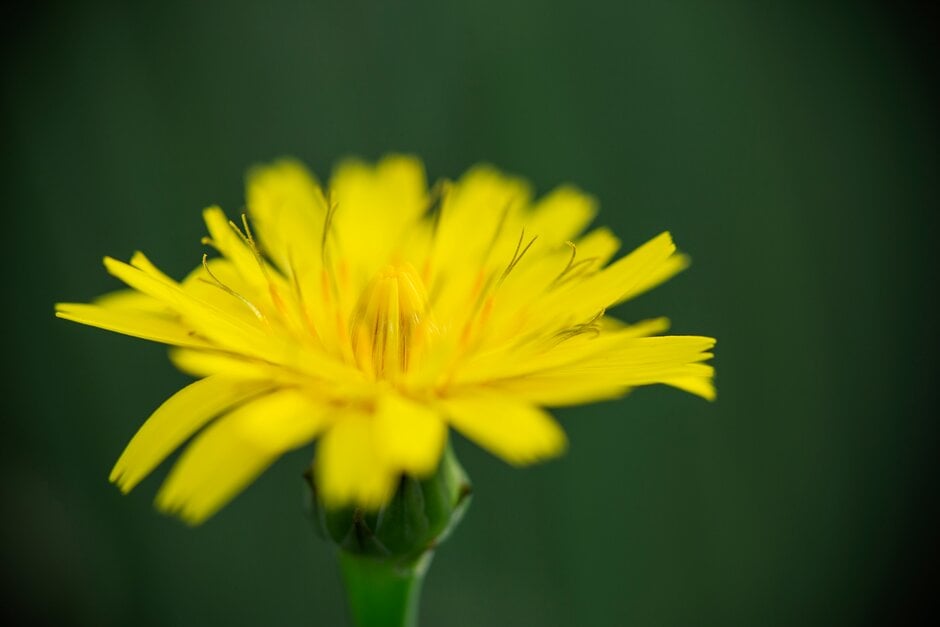
Reichardia picroides

RHS Plant Profile
common brighteyes
common brighteyes RHS

Other common names

common brighteyes

Synonyms

Picridium vulgare

Annual Biennial

A leafy, perennial salad vegetable which looks a bit like a dandelion, with clumps of narrow green leaves, which may develop scalloped edges, and bright yellow flowers with heart-shaped bracts appearing in April to August which are loved by bees. The flowers are followed by fluffy seedheads, like dandelion clocks. The leaves can still be harvested whilst the plant is in flower, and both young and older leaves have a mild and slightly sweet flavour. As a bonus it is also slug-resistant

Position

Full shade, Full sun, Partial shade

Soil Types

Chalk, Clay, Loam, Sand

Size

Time to Maturity
1 year

Growing Conditions

Chalk Clay Loam Sand
Moisture
Moist but well–drained
pH
Acid or Alkaline or Neutral

Position

Full shade Full sun Partial shade
Aspect
East–facing or North–facing or South–facing or West–facing
Exposure
Sheltered
Hardiness
H6

Colour & Scent

Season Stem Flower Foliage Fruit
Spring
Summer
Autumn
Winter

Botanical Details

Family
Asteraceae
Native to GB/Ireland
No
Foliage
Deciduous
Habit
Clump forming
Genus
Name Status
Correct

How to Grow

Cultivation

Grow in fertile, well-drained soil in sun to part-shade, although will produce better leaves in shade during the summer. Water thoroughly in dry spells. Drought tolerant once established. See salsify cultivation as the growing advice for this is very similar

Propagation

Propagate by seed, sowing spring to early autumn under glass in peat-free compost. Seeds may take a few weeks to germinate. May also be grown in situ outside once the soil has warmed up, or in pots outside and brought in over winter. Self-seeding

Suggested planting locations and garden types

  • Cottage and informal garden
  • Wildlife gardens
  • Flower borders and beds
  • Wall side borders

Pruning

Cut back stems in autumn to encourage further growth

Pests

Generally pest-free

Diseases

Generally disease-free