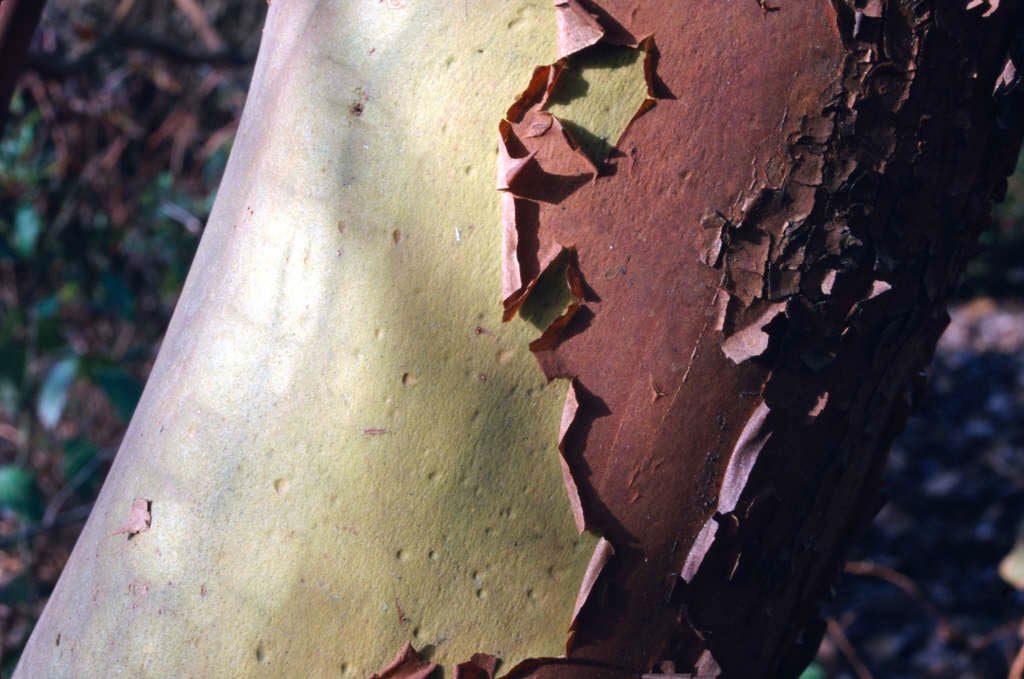
Arbutus menziesii

RHS Plant Profile
madrona
madrona RHS 2003

Other common names

madrone, madroño, Menzies' strawberry tree, tall strawberry tree

Synonyms

Arbutus procera Douglas non Sol.

Trees

A shrubby evergreen tree with peeling cinnamon-brown bark and glossy dark green leaves, whitish beneath. White, urn-shaped flowers in upright panicles in early summer appear in profusion and are followed by small orange-red fruits which ripen the following year. Whilst the fruits are edible and used to make jams and liqueurs in some countries, they are generally grown for ornamental purposes only in the UK

Position

Full sun

Soil Types

Clay, Loam, Sand

Max Height

Higher than 12 metres

Max Spread

wider than 8 metres

Size

Time to Maturity
20–50 years
Max Spread
wider than 8 metres
Max Height
Higher than 12 metres

Growing Conditions

Clay Loam Sand
Moisture
Well–drained
pH
Acid or Neutral or Alkaline

Position

Full sun
Aspect
South–facing or West–facing
Exposure
Sheltered
Hardiness
H4

Colour & Scent

Season Stem Flower Foliage Fruit
Spring
Summer
Autumn
Winter

Botanical Details

Family
Ericaceae
Native to GB/Ireland
No
Foliage
Evergreen
Habit
Columnar upright
Potentially harmful
Fruit are ornamental - not to be eaten. Wear gloves and other protective equipment when handling Pets: Fruit are ornamental - not to be eaten - see the HTA guide to potentially harmful plants for further information and useful contact numbers
Genus
Arbutus are evergreen trees and shrubs with small, bell-shaped creamy-white or pink flowers, and red, strawberry-like fruits in autumn
Name Status
Correct
Plant Range
NW United States

How to Grow

Cultivation

Grow in humus-rich, well-drained soil in full sun with shelter from cold winds

Propagation

Propagate by seed and semi-ripe cuttings in late summer

Suggested planting locations and garden types

  • Coastal
  • Cottage and informal garden
  • Mediterranean climate plants
  • Low Maintenance

Pruning

Pruning group 1 but keep pruning to a minimum

Pests

May be susceptible to aphids

Diseases

May be susceptible to arbutus leaf spot and honey fungus