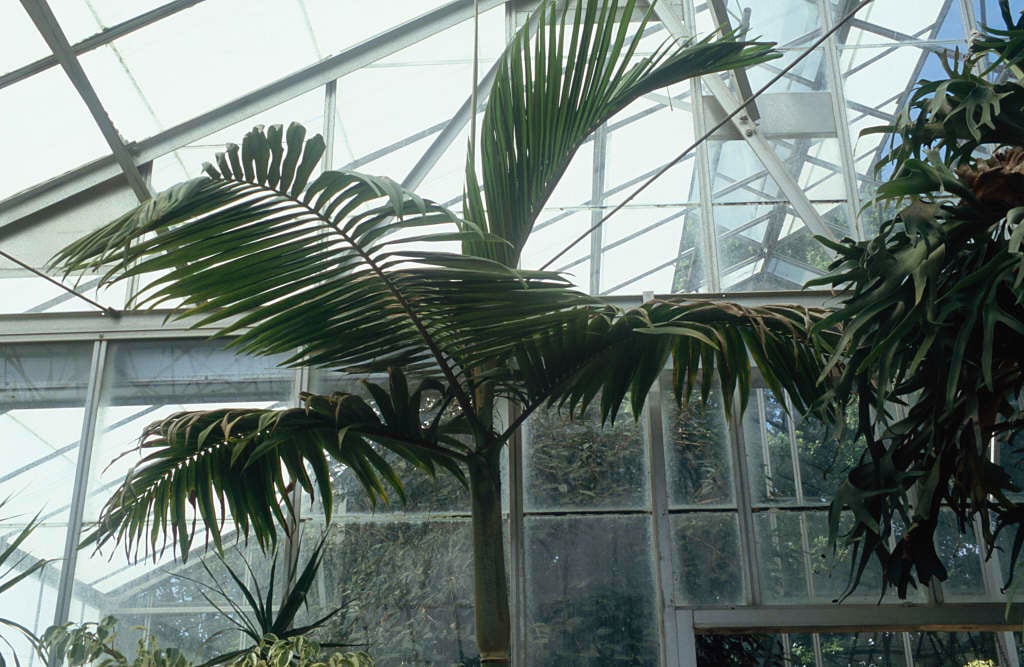
Archontophoenix cunninghamiana

RHS Plant Profile
bangalow palm
bangalow palm RHS

Other common names

Illawara palm, piccabben, piccabeen

Synonyms

Archontophoenix cunninghamiana 'Illawara'

Conservatory Greenhouse Palms

A tree-like evergreen palm to 15m, with a single trunk and pinnate leaves to 4m long. Flowers small, lilac, in large racemes on mature trees, followed by red fruit

Position

Partial shade

Soil Types

Chalk, Loam, Sand

Max Height

Higher than 12 metres

Max Spread

4-8 metres

Size

Time to Maturity
20–50 years
Max Spread
4-8 metres
Max Height
Higher than 12 metres

Growing Conditions

Chalk Loam Sand
Moisture
Well–drained
pH
Acid or Alkaline or Neutral

Position

Partial shade
Aspect
West–facing or East–facing
Exposure
Sheltered
Hardiness
H1B

Colour & Scent

Season Stem Flower Foliage Fruit
Spring
Summer
Autumn
Winter

Botanical Details

Family
Arecaceae
Native to GB/Ireland
No
Foliage
Evergreen
Habit
Columnar upright
Genus
Archontophoenix are single-stemmed evergreen palms with large pinnate leaves and large panicles or racemes of small cup-shaped flowers
Name Status
Correct
Plant Range
E Australia

How to Grow

Cultivation

Under glass grow in peat-free potting compost in bright filtered light with moderate humidity. When in growth, water moderately and apply a liquid fertilizer monthly; keep just moist in winter. Outdoors grow in fertile moist but well drained soil in part shade to prevent leaf scorch

Propagation

Propagate by seed sown in spring at 24-27°C (75-81°F). Keep compost moist and air humid

Suggested planting locations and garden types

  • Architectural

Pruning

Minimal pruning required; remove dead leaves by cutting close to the leaf base leaving stubs to create a neat pattern

Pests

May be susceptible to glasshouse red spider mite

Diseases

Generally disease-free