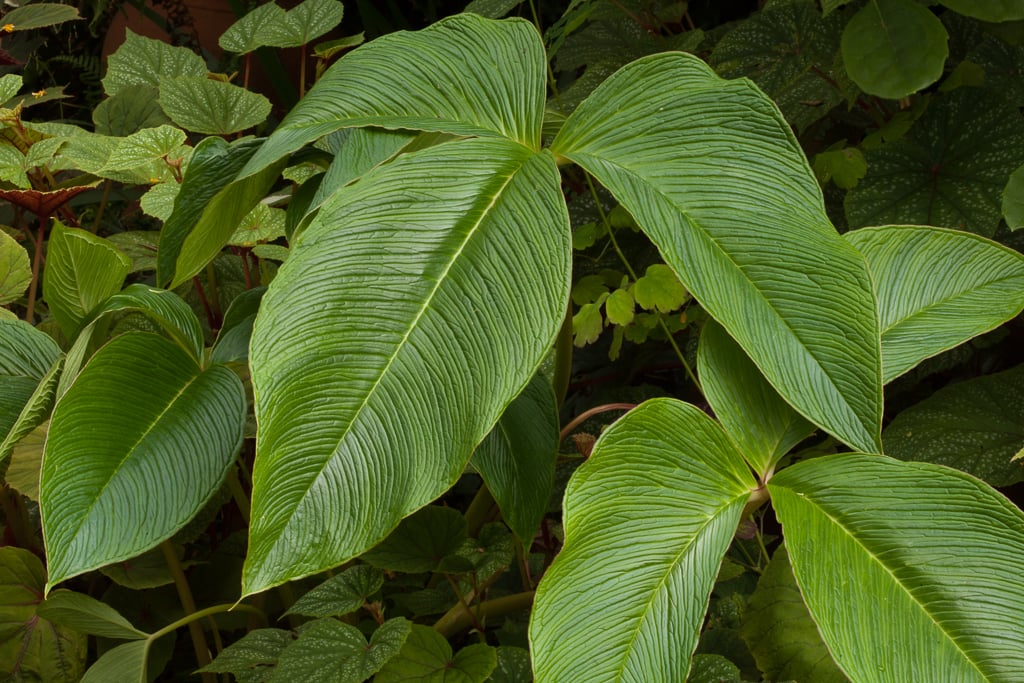
Arisaema costatum

RHS Plant Profile
ribbed cobra lily
ribbed cobra lily John Fielding
Herbaceous Perennial

A tuberous perennial, to about 60cm with large three-lobed shiny, dark green leaves, to 40cm long with distinctive ridged veins and purple margins. The leaves emerge in early summer before the flowers which last throughout the summer. Flowers comprise of a deep purple hooded spathe with white stripes, and a long narrow twisted spadix.

Position

Partial shade

Soil Types

Loam, Sand

Max Height

0.5-1 metres

Max Spread

0.5-1 metres

Size

Time to Maturity
5–10 years
Max Spread
0.5-1 metres
Max Height
0.5-1 metres

Growing Conditions

Loam Sand
Moisture
Moist but well–drained
pH
Acid or Neutral

Position

Partial shade
Aspect
East–facing or North–facing or West–facing
Exposure
Sheltered
Hardiness
H4

Colour & Scent

Season Stem Flower Foliage Fruit
Spring
Summer
Autumn
Winter

Botanical Details

Family
Araceae
Native to GB/Ireland
No
Foliage
Deciduous
Habit
Columnar upright
Potentially harmful
Humans/Pets: Harmful if eatenskin/eye irritant. Wear gloves and other protective equipment when handling For further information and contact numbers regarding pets, see the HTA guide to potentially harmful plants
Genus
Arisaema are mostly tuberous perennials usually with palmately lobed leaves, and distinctive tubular, hooded spathes within which the tiny true flowers are clustered at the base of the club-like or filamentous spadix, followed by a spike of red berries
Name Status
Correct
Plant Range
Himalaya to S Tibet

How to Grow

Cultivation

Plant the tubers 20cm deep in winter or spring, into moist but well-drained, humus-rich soil in a cool, partially shaded site. In colder regions it may need winter protection, mulch with well-rotted leaf mould for insulation. Tubers must not dry out while dormant but avoid excessive winter wet.

Propagation

Propagate by seed sown in containers in a cold frame in autumn or spring. Offsets may be removed in late summer

Suggested planting locations and garden types

  • Cottage and informal garden
  • Patio and container plants
  • City and courtyard gardens
  • Underplanting of roses and shrubs
  • Flower borders and beds

Pruning

No pruning required

Pests

May be susceptible to slugs and vine weevil

Diseases

Generally disease-free