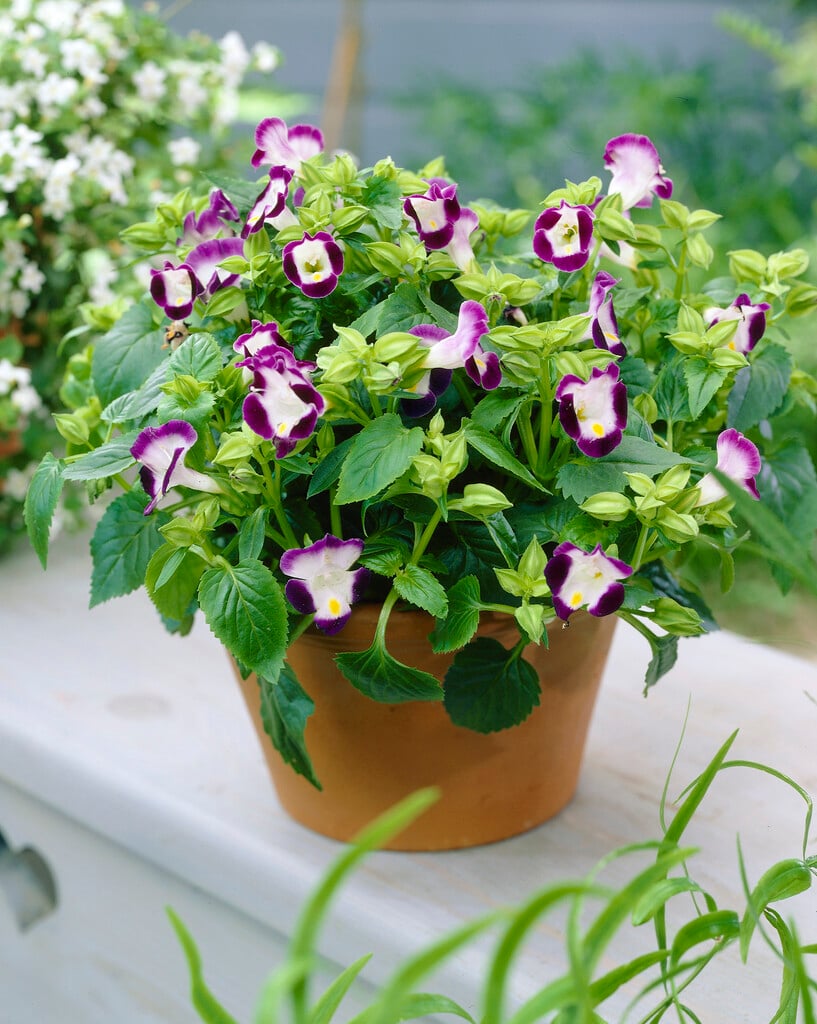
Torenia fournieri

RHS Plant Profile
wishbone flower
wishbone flower visionspictures.com

Other common names

blue wing flower, bluewings

Annual Biennial

A compact, tender, bushy annual with toothed, pale green foliage. Trumpet-shaped purple and white flowers with a yellow throat, and wishbone-shaped stamens, appear over a long flowering period from summer through to the autumn. Although performs best in a sunny location, will tolerate some shade

Position

Full sun, Partial shade

Soil Types

Chalk, Clay, Loam, Sand

Max Height

0.1-0.5 metres

Max Spread

0.1-0.5 metres

Size

Time to Maturity
1 year
Max Spread
0.1-0.5 metres
Max Height
0.1-0.5 metres

Growing Conditions

Chalk Clay Loam Sand
Moisture
Moist but well–drained
pH
Acid or Alkaline or Neutral

Position

Full sun Partial shade
Aspect
East–facing or South–facing or West–facing
Exposure
Sheltered
Hardiness
H2

Colour & Scent

Season Stem Flower Foliage Fruit
Spring
Summer
Autumn
Winter

Botanical Details

Family
Linderniaceae
Native to GB/Ireland
No
Foliage
Deciduous
Habit
Bushy
Genus
Name Status
Correct
Plant Range
S & SE Asia

How to Grow

Cultivation

Grow in moist but well-drained, fertile, slightly acidic soil in a sunny position when the risk of frost has passed. Tolerates shady areas if soil conditions are suitable. Feed with a suitable multi-purpose plant food throughout the growing season

Propagation

Propagate by seed stem cuttings or seed indoors. Transplant to desired location outdoors after the risk of frost has passed. Dislikes root disturbance, so if growing from seed, plant in biodegradable pots which can be transplanted directly into the ground without disturbing the roots

Suggested planting locations and garden types

  • City and courtyard gardens
  • Cottage and informal garden
  • Hanging Basket
  • Patio and container plants
  • Low Maintenance
  • Flower borders and beds
  • Garden edging

Pruning

No pruning required, but cut back by half if plants become leggy to encourage bushier growth and potentially a new flush of flowers

Pests

May be susceptible to slugs, snails and aphids

Diseases

May be susceptible to root rot and powdery mildews