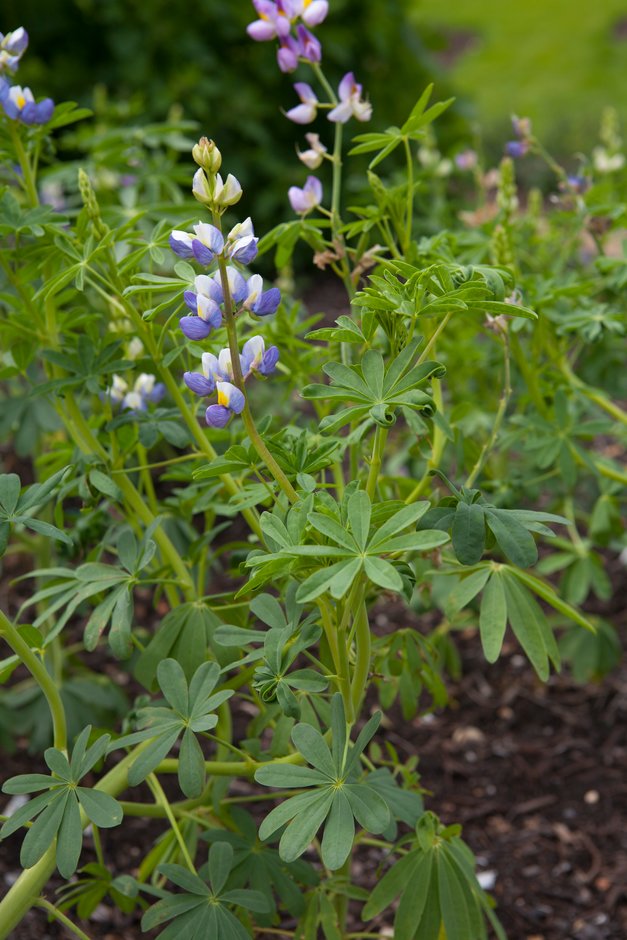
Lupinus mutabilis

RHS Plant Profile
pearl lupin
pearl lupin RHS

Other common names

tarhui, tarwi

Annual Biennial

An erect, bushy annual with blue-green leaves of seven to nine leaflets and upright spires of small, pea-like flowers with pale purple-blue keels, yellow standards and deep blue wings. The seeds can be processed to make them edible

Position

Full sun, Partial shade

Soil Types

Loam, Sand

Max Height

0.5-1 metres

Max Spread

0.1-0.5 metres

Size

Time to Maturity
2–5 years
Max Spread
0.1-0.5 metres
Max Height
0.5-1 metres

Growing Conditions

Loam Sand
Moisture
Moist but well–drained
pH
Acid or Neutral

Position

Full sun Partial shade
Aspect
East–facing or South–facing or West–facing
Exposure
Exposed or Sheltered
Hardiness
H3

Colour & Scent

Season Stem Flower Foliage Fruit
Spring
Summer
Autumn
Winter

Botanical Details

Family
Fabaceae
Native to GB/Ireland
No
Foliage
Deciduous
Habit
Bushy
Potentially harmful
Harmful if eaten. Wear gloves and other protective equipment when handling. TOXIC to pets if eaten (dogs, cats, rabbits, tortoises) - see the HTA guide to potentially harmful plants for further information and useful contact numbers
Genus
Lupinus can be annuals, perennials or shrubs, with palmate leaves and showy terminal racemes of pea-like flowers
Name Status
Correct

How to Grow

Cultivation

Grow in moderately fertile, humus-rich, light, moist but well-drained soil in full sun or light, dappled shade. See lupin cultivation

Propagation

Propagate from seed (indoors or outdoors)

Suggested planting locations and garden types

  • Coastal
  • Cottage and informal garden
  • Flower borders and beds

Pruning

Deadhead to encourage more flowers

Pests

May be susceptible to slugs and lupin aphid

Diseases

May be susceptible to powdery mildews, rots, a leaf spot and a virus