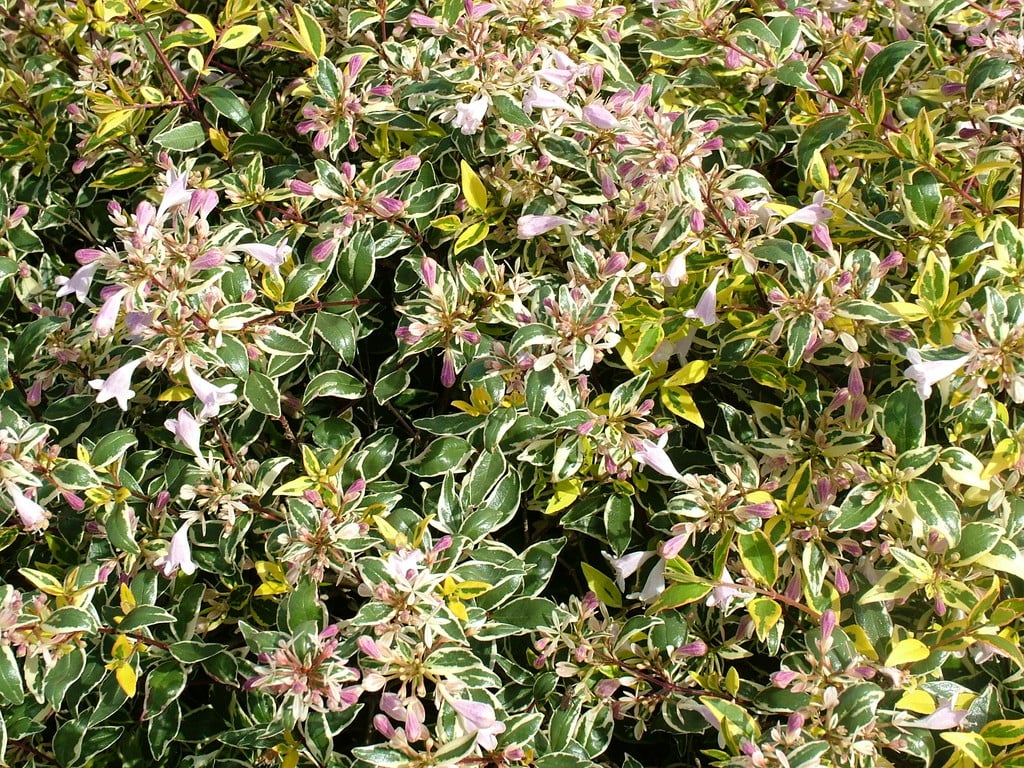
Abelia × grandiflora 'Hopleys'PBR (v)

RHS Plant Profile
abelia 'Hopleys'
abelia 'Hopleys' RHS

Synonyms

Abelia 'Abghop'
Abelia × grandiflora Hopleys

Award of Garden Merit
Shrubs

One of the most stable of the variegated abelias. The green leaves have irregular yellow margins, bright in spring, gradually paling almost to white with exposure. Abundant lilac-tinged white flowers open from darker buds, subtended by creamy-white calyx lobes which add to the light, variegated appearance of the whole bush

Position

Full sun

Soil Types

Chalk, Loam, Sand

Max Height

1-1.5 metres

Max Spread

1-1.5 metres

Size

Time to Maturity
10–20 years
Max Spread
1-1.5 metres
Max Height
1-1.5 metres

Growing Conditions

Chalk Loam Sand
Moisture
Moist but well–drained
pH
Acid or Alkaline or Neutral

Position

Full sun
Aspect
South–facing or East–facing
Exposure
Sheltered
Hardiness
H4
Drought Resistance
Yes

Colour & Scent

Fragrance Flower
Season Stem Flower Foliage Fruit
Spring
Summer
Autumn
Winter

Botanical Details

Family
Caprifoliaceae
Native to GB/Ireland
No
Foliage
Semi evergreen
Habit
Bushy
Genus
Abelia can be deciduous or evergreen shrubs or small trees, with paired or whorled leaves and axillary or terminal clusters of funnel-shaped or trumpet-shaped flowers in summer and autumn, sometimes with conspicuous, colourful calyces
Name Status
Accepted

How to Grow

Cultivation

Very easy to grow in reasonable conditions although not fully hardy; requires a sheltered, sunny position

Propagation

Propagate by softwood cuttings in early summer or semi-hardwood cuttings in late summer

Suggested planting locations and garden types

  • City and courtyard gardens
  • Cottage and informal garden
  • Low Maintenance
  • Flower borders and beds
  • Wall side borders

Pruning

Pruning group 8. May need hard pruning (Pruning Group 6) every 3 to 4 years

Pests

Generally pest-free

Diseases

May be susceptible to honey fungus