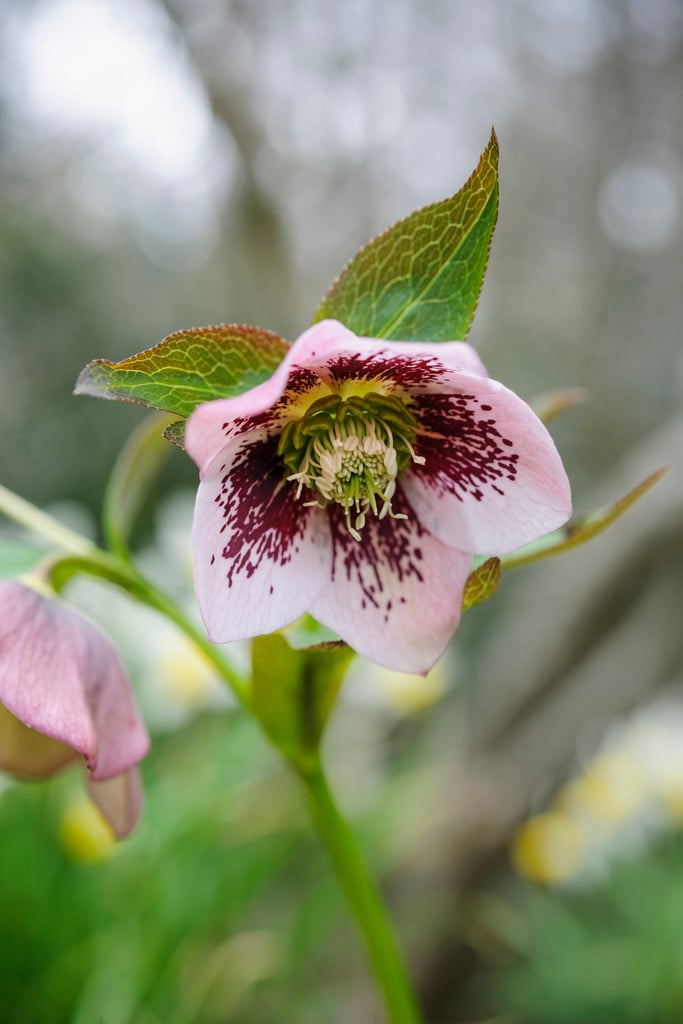
Helleborus × hybridus spotted, pink

RHS Plant Profile
pink-spotted hellebore
pink-spotted hellebore RHS

Synonyms

Helleborus orientalis hort. pink, spotted
Helleborus orientalis subsp. guttatus misapplied pink
Helleborus × hybridus pink speckled

Plants for pollinators
Herbaceous Perennial

Spotted, pink is a seed-raised strain of semi-evergreen herbaceous perennials, up to 45cm high, with dark green leaves and flowers in shades of pink, spotted to varying amounts with dark pink or dark red, from late winter to early spring

Position

Full sun, Partial shade

Soil Types

Chalk, Clay, Loam

Max Height

0.1-0.5 metres

Max Spread

0.1-0.5 metres

Size

Time to Maturity
2–5 years
Max Spread
0.1-0.5 metres
Max Height
0.1-0.5 metres

Growing Conditions

Chalk Clay Loam
Moisture
Moist but well–drained
pH
Alkaline or Neutral

Position

Full sun Partial shade
Aspect
South–facing or North–facing or West–facing or East–facing
Exposure
Sheltered
Hardiness
H7

Colour & Scent

Season Stem Flower Foliage Fruit
Spring
Summer
Autumn
Winter

Botanical Details

Family
Ranunculaceae
Native to GB/Ireland
No
Foliage
Semi evergreen
Habit
Clump forming
Potentially harmful
Harmful if eatenskin irritant. Wear gloves and other protective equipment when handling. Pets: Harmful if eatenskin irritant. For further information and contact numbers regarding pets, see the HTA guide to potentially harmful plants
Genus
Helleborus can be rhizomatous, herbaceous or semi-evergreen perennials forming a clump of pedate basal leaves, or evergreen with erect, leafy stems. Large, bowl-shaped flowers are borne in loose clusters in late winter or spring
Name Status
Correct

How to Grow

Cultivation

Will tolerate a wide range of conditions, but does best in fertile, moisture-retentive, humus-rich but well-drained soil which is preferably heavy, and neutral or alkaline, in a position with shelter from strong, cold winds and in dappled shade, mulched every autumn with leaf mould, chipped bark or other organic matter; for more advice, see hellebore cultivation

Propagation

Propagate by division of large clumps in early spring, watering well until they are established

Suggested planting locations and garden types

  • City and courtyard gardens
  • Cottage and informal garden
  • Banks and slopes
  • Underplanting of roses and shrubs
  • Flower borders and beds
  • Ground cover

Pruning

Remove old leaves to help prevent hellebore leaf spot, and deadhead by removing old faded flower stems

Pests

May be susceptible to hellebore aphid, hellebore leaf miner and snails

Diseases

May be susceptible to hellebore black death, hellebore leaf spot, downy mildews, grey moulds (botrytis), smuts, and virus diseases