Nigella papillosa
papillose-leaved love-in-a-mist
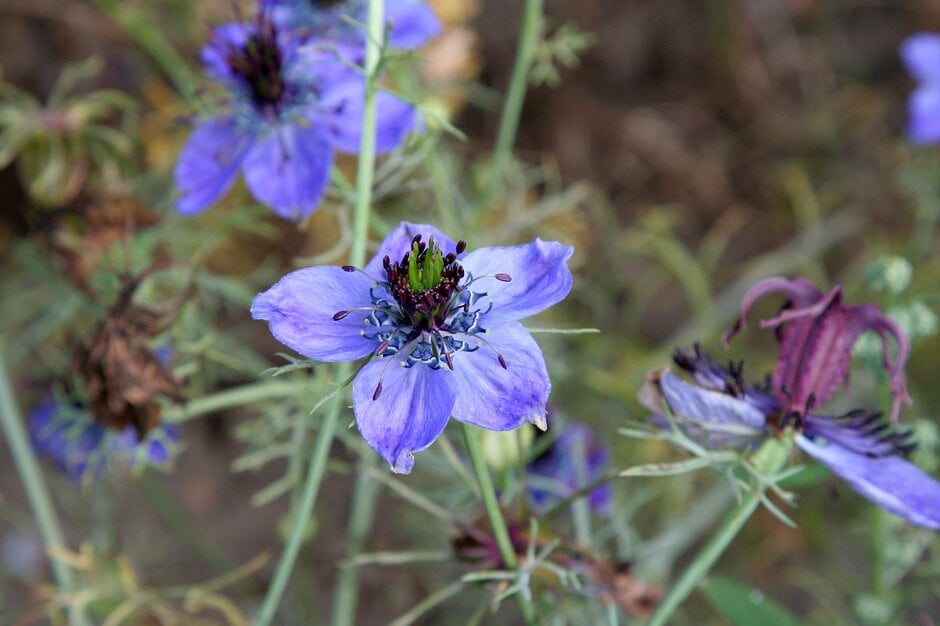
An upright, bushy annual to 50cm high, with fine, feathery foliage and slender branching stems. Flowers are slightly larger than other species, up to 7cm across, usually in shades of blue and purple, sometimes white, and are followed by decorative goblet-shaped seedheads with starlike styles
Size
Ultimate height
0.1–0.5 metresTime to ultimate height
1 yearUltimate spread
0.1–0.5 metresGrowing conditions
Moisture
Well–drainedpH
Acid, Alkaline, NeutralColour & scent
| Stem | Flower | Foliage | Fruit | |
| Spring | Green | |||
|---|---|---|---|---|
| Summer | Blue Purple White | Green | ||
| Autumn | Green | |||
| Winter |
Position
- Full sun
- Partial shade
Aspect
East–facing or South–facing or West–facing
Exposure
Exposed or Sheltered Hardiness
H3Botanical details
- Family
- Ranunculaceae
- Native to GB / Ireland
- No
- Foliage
- Deciduous
- Habit
- Bushy
- Genus
Nigella are upright, bushy annuals with finely dissected leaves and solitary flowers with 5 blue or white, petal-like sepals and feathery bracts, followed by ornamental seed pods
- Name status
Correct
- Plant range
- Azores, W & C Mediterranean
How to grow
Cultivation
Grow in any well-drained soil in full sun
Propagation
Propagate by seed sown in situ in mid-spring or autumn. Autumn-sown plants may need some winter protection
Suggested planting locations and garden types
- City and courtyard gardens
- Cottage and informal garden
- Coastal
- Patio and container plants
- Prairie planting
- Cut flowers
- Flower borders and beds
Pruning
Deadhead to prolong flowering
Pests
Generally pest-free
Diseases
Generally disease-free
Get involved
The Royal Horticultural Society is the UK’s leading gardening charity. We aim to enrich everyone’s life through plants, and make the UK a greener and more beautiful place.