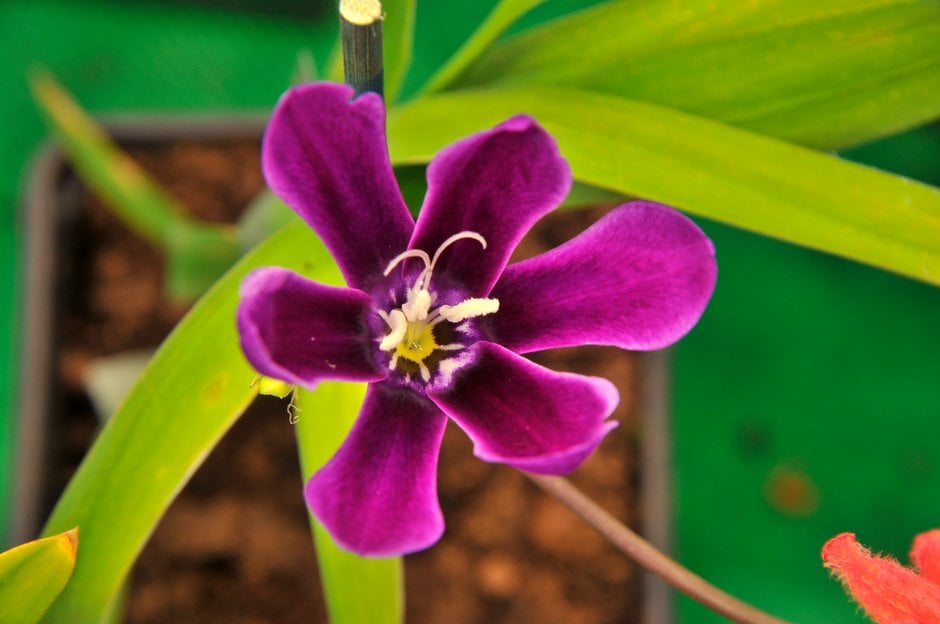
Sparaxis grandiflora subsp. grandiflora
large-flowered harlequin flower
A cormous perennial with sword-shaped leaves forming an erect, basal fan. Small clusters of purple to reddish-purple flowers comprising six tepals with rounded tips are borne on stems up to around 25cm tall

Size
Ultimate height
0.1–0.5 metresTime to ultimate height
1–2 yearsUltimate spread
0–0.1 metreGrowing conditions
Moisture
Well–drainedpH
Acid, Alkaline, NeutralColour & scent
| Stem | Flower | Foliage | Fruit | |
| Spring | Red Purple | Green | ||
|---|---|---|---|---|
| Summer | Red Purple | Green | ||
| Autumn | ||||
| Winter |
Position
- Full sun
Aspect
South–facing or West–facing
Exposure
Sheltered Hardiness
H2Botanical details
- Family
- Iridaceae
- Native to GB / Ireland
- No
- Foliage
- Deciduous
- Habit
- Columnar upright
- Genus
Sparaxis are cormous perennials forming a fan-shaped tuft of linear or narrowly lance-shaped leaves, with funnel-shaped flowers borne in loose spikes
- Name status
Correct
- Plant range
- S Africa (W Cape)
How to grow
Cultivation
Grow under glass in good light but shaded from hot sun. In autumn, plant corms 20cm deep in peat-free, loam-based potting compost with added sand and leaf mould. Water sparingly when in growth and keep cool; dry off as flowers fade and keep completely dry when dormant
Propagation
Propagate by seed sown in containers in a cold frame as soon as ripe or remove offsets when dormant
Suggested planting locations and garden types
- Patio and container plants
- Mediterranean climate plants
Pruning
Remove spent flower stems and allow foliage to die down naturally
Pests
Generally pest-free
Diseases
Generally disease-free
Get involved
The Royal Horticultural Society is the UK’s leading gardening charity. We aim to enrich everyone’s life through plants, and make the UK a greener and more beautiful place.