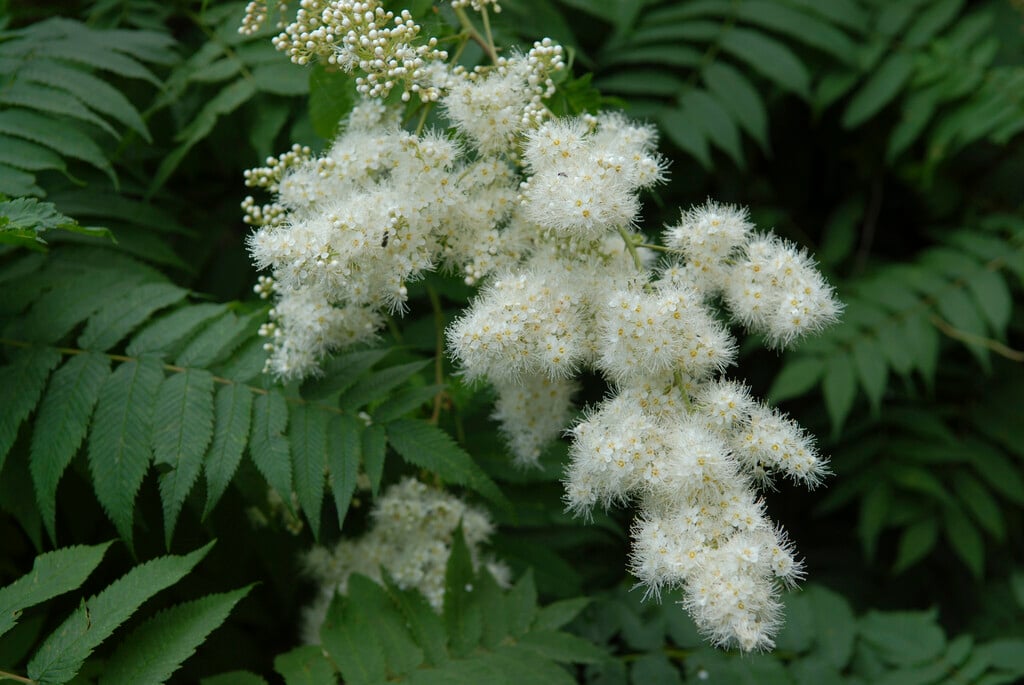
Sorbaria tomentosa

<em>Sorbaria</em> <em>tomentosa</em> visionspictures.com

Synonyms

Spiraea lindleyana
Sorbaria lindleyana

Shrubs

A large, spreading, suckering, deciduous shrub which, in favourable conditions, can reach a height of around 6m. Dark green pinnate foliage is tapered and divided into lance-shaped leaflets. In summer, large, fluffy conical heads of small, fragrant, creamy-white flowers appear

Position

Full sun, Partial shade

Soil Types

Chalk, Clay, Loam, Sand

Max Height

4-8 metres

Max Spread

2.5-4 metres

Size

Time to Maturity
5–10 years
Max Spread
2.5-4 metres
Max Height
4-8 metres

Growing Conditions

Chalk Clay Loam Sand
Moisture
Moist but well–drained
pH
Alkaline or Neutral

Position

Full sun Partial shade
Aspect
East–facing or North–facing or South–facing or West–facing
Exposure
Exposed or Sheltered
Hardiness
H5

Colour & Scent

Fragrance Flower
Season Stem Flower Foliage Fruit
Spring
Summer
Autumn
Winter

Botanical Details

Family
Rosaceae
Native to GB/Ireland
No
Foliage
Deciduous
Habit
Suckering
Genus
Sorbaria are large, deciduous suckering shrubs with attractive pinnate leaves and small, white, spiraea-like flowers borne in large terminal panicles in summer
Name Status
Correct
Plant Range
Himalaya

How to Grow

Cultivation

Best grown in moderately fertile, moist but well-drained soil. Useful for waterside plantings but neglected plants can rapidly form thickets when it would have the potential to become a nuisance if not managed well

Propagation

Propagate by sowing seed in containers in a cold frame in autumn, or by semi-riope cuttings or removal of rooted suckers

Suggested planting locations and garden types

  • Cottage and informal garden
  • Low Maintenance
  • Flower borders and beds

Pruning

Pruning group 2 or pruning group 6; sucker removal in winter

Pests

Generally pest-free

Diseases

Generally disease-free