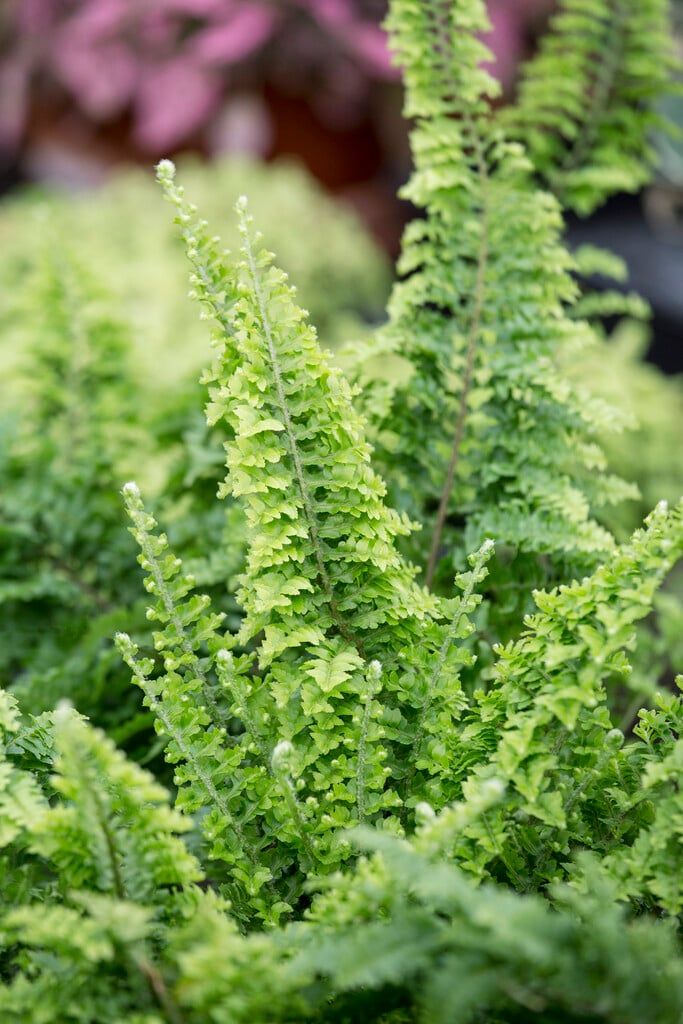
Nephrolepis exaltata 'Fluffy Ruffles'

RHS Plant Profile
sword fern 'Fluffy Ruffles'
sword fern 'Fluffy Ruffles' visionspictures.com
Award of Garden Merit
Conservatory Greenhouse Ferns Herbaceous Perennial Houseplants

A compact, clump-forming evergreen fern with masses of dense, sword-shaped, tripinnate fronds which are ruffled around the edges. A good air-purifying plant and ideal for terrariums and bottle gardens

Position

Partial shade

Soil Types

Loam, Sand

Max Height

0.1-0.5 metres

Max Spread

0.5-1 metres

Size

Time to Maturity
5–10 years
Max Spread
0.5-1 metres
Max Height
0.1-0.5 metres

Growing Conditions

Loam Sand
Moisture
Moist but well–drained
pH
Acid or Neutral

Position

Partial shade
Aspect
North–facing or West–facing or East–facing
Exposure
Sheltered
Hardiness
H1B

Colour & Scent

Season Stem Flower Foliage Fruit
Spring
Summer
Autumn
Winter

Botanical Details

Family
Lomariopsidaceae
Native to GB/Ireland
No
Foliage
Evergreen
Habit
Bushy
Genus
Nephrolepis are rhizomatous, sometimes stoloniferous, evergreen ferns with narrow, pinnately divided fronds, broader and more highly dissected in many cultivars
Name Status
Accepted

How to Grow

Cultivation

Grow indoors or under glass in a peat-free multipurpose compost, or a mix of 1 part loam, 2 parts sharp sand and 3 parts leaf mould in bright filtered light, with moderate to high humidity and good ventilation. During the growing season, water moderately with soft water and apply a half-strength balanced liquid fertiliser monthly. Water sparingly in winter. Fronds can rot if they become too wet. See Epiphytic Ferns for further advice. An ideal plant for terrariums and bottle gardens. See how to grow ferns as houseplants for further advice

Propagation

Sow spores are 21°C (70°F) as soon as ripe, but resulting plants are unlikely to come true. Separate rooted runners in late winter or early spring

Suggested planting locations and garden types

  • Houseplants
  • Patio and container plants
  • Conservatory and greenhouse

Pruning

Remove any dead fronds

Pests

May be susceptible to scale insects

Diseases

Generally disease-free