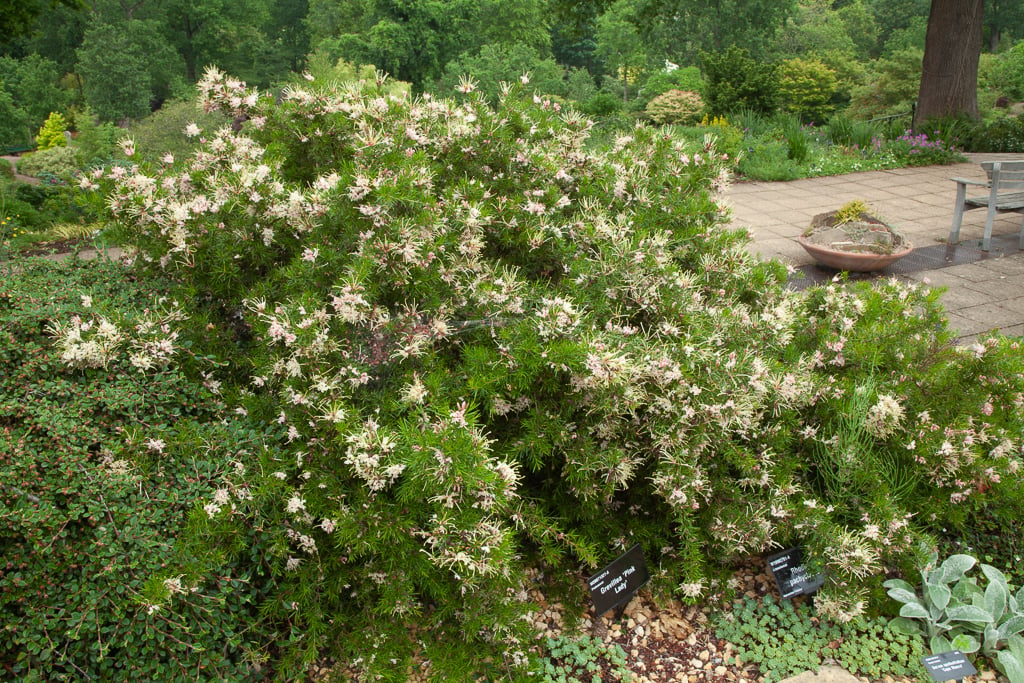
Grevillea 'Pink Lady'
grevillea 'Pink Lady'
A low-growing evergreen shrub with a dense, spreading habit and needle-like green leaves. Produces clusters of honeysuckle-like flowers, with long styles and curving sepals, in shades from pale pink to deep rose. Flowers over a long period from winter to late spring or summer
Buy this plant
Size
Ultimate height
0.1–0.5 metresTime to ultimate height
10–20 yearsUltimate spread
1–1.5 metresGrowing conditions
Moisture
Well–drainedpH
Acid, NeutralColour & scent
| Stem | Flower | Foliage | Fruit | |
| Spring | Pink | Green | ||
|---|---|---|---|---|
| Summer | Pink | Green | ||
| Autumn | Green | |||
| Winter | Pink | Green |
Position
- Full sun
Aspect
South–facing or West–facing
Exposure
Sheltered Hardiness
H3Botanical details
- Family
- Proteaceae
- Native to GB / Ireland
- No
- Foliage
- Evergreen
- Habit
- Spreading branched
- Potentially harmful
- Skin irritant/allergen. Wear gloves and other protective equipment when handling Pets: Skin irritant/allergen. For further information and contact numbers regarding pets, see the HTA guide to potentially harmful plants
- Genus
Grevillea can be evergreen shrubs or trees, with alternate, simple or pinnately divided leaves and petal-less flowers consisting of a colourful calyx tube with protruding style, borne in racemes or panicles
- Name status
Accepted
How to grow
Cultivation
In frost-free areas, grow in well-drained, lime-free soil in a sunny position. In areas prone to frost, grow in an ericaceous potting mix in a cool greenhouse or conservatory, or in containers that can be moved indoors over winter. Drought tolerant when established
Propagation
Propagate by semi-ripe cuttings in summer, or by grafting under glass in winter
Suggested planting locations and garden types
- Coastal
- Cottage and informal garden
- Gravel garden
- Mediterranean climate plants
- Patio and container plants
- Rock garden
- Banks and slopes
- Conservatory and greenhouse
- Flower borders and beds
- Ground cover
Pruning
Pruning group 1 outdoors, restrictive pruning may be required if grown under glass
Pests
Generally pest-free
Diseases
May be susceptible to honey fungus (rarely)
Get involved
The RHS is the UK’s gardening charity, helping people and plants to grow - nurturing a healthier, happier world, one person and one plant at a time.