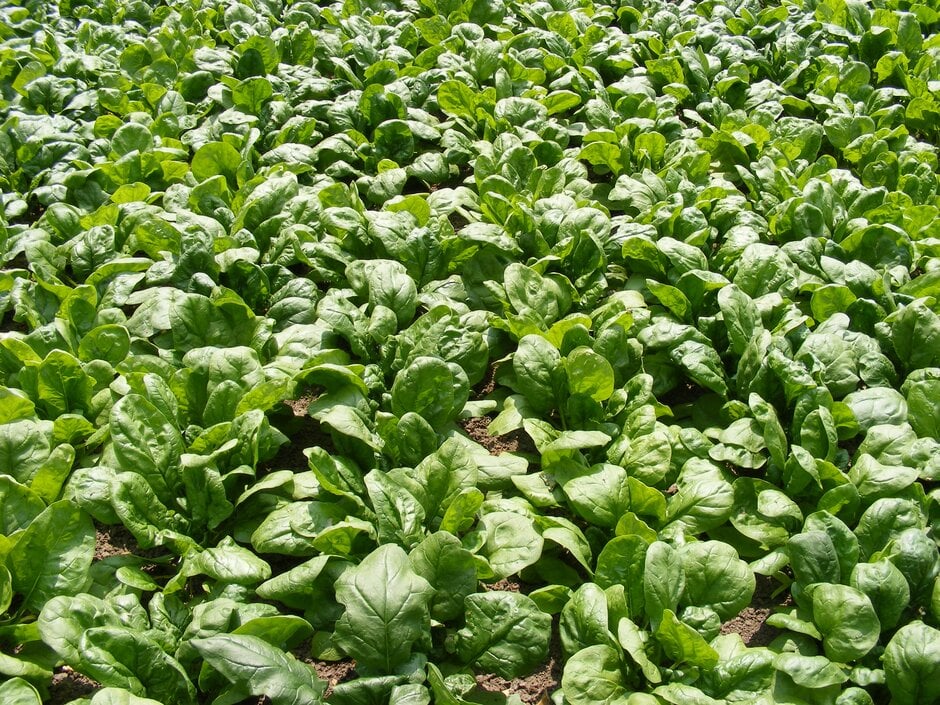
Spinacia oleracea 'Emilia'

RHS Plant Profile
spinach 'Emilia'
spinach 'Emilia' RHS
Annual Biennial

A variety of spinach, a leafy biennial harvested in its first year. It is a very uniform, upright grower with rounded, slightly blistered, medium-textured, dark green leaves.

Position

Full sun, Partial shade

Soil Types

Chalk, Clay, Loam, Sand

Max Height

0.1-0.5 metres

Max Spread

0.1-0.5 metres

Size

Time to Maturity
1 year
Max Spread
0.1-0.5 metres
Max Height
0.1-0.5 metres

Growing Conditions

Chalk Clay Loam Sand
Moisture
Moist but well–drained
pH
Acid or Alkaline or Neutral

Position

Full sun Partial shade
Aspect
South–facing or East–facing or West–facing
Exposure
Sheltered
Hardiness
H2

Colour & Scent

Season Stem Flower Foliage Fruit
Spring
Summer
Autumn
Winter

Botanical Details

Family
Amaranthaceae
Native to GB/Ireland
No
Foliage
Deciduous
Habit
Clump forming
Genus
Spinacia are annual or biennial herbaceous plants, usually dioecious, with upright stems and smooth leaves that are ovate or triangular. Edible species are cultivated for their leaves (spinach)
Name Status
Accepted

How to Grow

Cultivation

Does best on fertile soil rich in organic matter with a steady moisture supply. Winter crops need a sunny position, summer crops benefit from a little shade. Sow summer cultivars every few weeks from February (under biodegradable fleece or cloches) to the end of May. Sow winter cultivars in August and Sep, protecting the crop in cold spells. See Spinach (Grow your own)

Propagation

Propagate by seed. See sowing vegetable seeds

Suggested planting locations and garden types

  • Patio and container plants

Pruning

No pruning required

Pests

At risk from damage by pigeons

Diseases

May be susceptible to spinach downy mildew