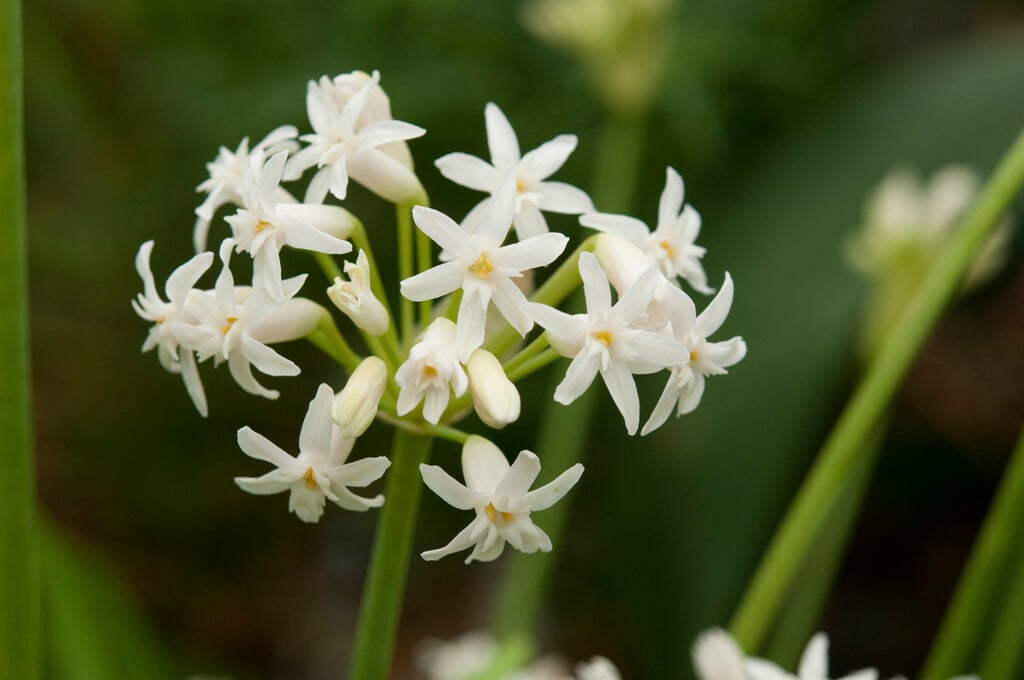
Tulbaghia simmleri

RHS Plant Profile
pink agapanthus
pink agapanthus visionspictures.com

Other common names

sweet garlic

Synonyms

Tulbaghia cepacea misapplied
Tulbaghia pulchella
Tulbaghia fragrans

Award of Garden Merit
Herbaceous Perennial

A rhizomatous perennial, 30 to 50cm in height, with grey-green basal leaves and fragrant lilac flowers in terminal umbels in summer and early autumn

Position

Full sun

Soil Types

Loam, Sand

Max Height

0.1-0.5 metres

Max Spread

0.1-0.5 metres

Size

Time to Maturity
1–2 years
Max Spread
0.1-0.5 metres
Max Height
0.1-0.5 metres

Growing Conditions

Loam Sand
Moisture
Well–drained
pH
Neutral or Alkaline or Acid

Position

Full sun
Aspect
South–facing or West–facing
Exposure
Sheltered
Hardiness
H3

Colour & Scent

Fragrance Flower Foliage
Season Stem Flower Foliage Fruit
Spring
Summer
Autumn
Winter

Botanical Details

Family
Amaryllidaceae
Native to GB/Ireland
No
Foliage
Deciduous
Habit
Clump forming
Genus
Tulbaghia are bulbous or rhizomatous perennials with linear, onion-scented leaves and umbels of small, star-shaped flowers with a small cup-like corona
Name Status
Correct
Plant Range
N South Africa

How to Grow

Cultivation

Grows well in any moderately fertile, well-drained, loamy soil. Protect in all but the mildest areas over winter with a deep dry mulch or bring container grown plants into an unheated greenhouse

Propagation

Propagate by seed or division

Suggested planting locations and garden types

  • City and courtyard gardens
  • Coastal
  • Cottage and informal garden
  • Gravel garden
  • Mediterranean climate plants
  • Patio and container plants
  • Conservatory and greenhouse
  • Flower borders and beds
  • Wall side borders

Pruning

No pruning required

Pests

Generally pest-free

Diseases

Generally disease-free