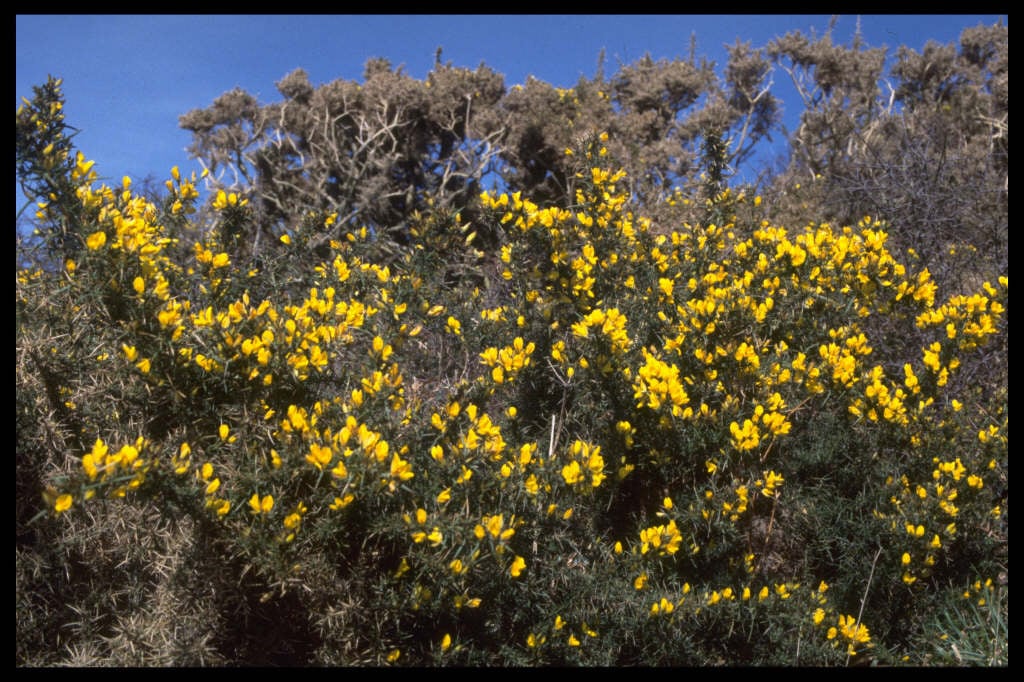
Ulex europaeus

RHS Plant Profile
common gorse
common gorse Mike L. Grant 1998

Other common names

European furze, French furze, furze, gorse, Irish gorse, thorn broom, whin

Shrubs

A bushy evergreen shrub with very spiny much-branched stems and solitary coconut-scented bright yellow flowers 2cm in length, mainly in winter and spring, followed by slender black seed-pods

Position

Full sun

Soil Types

Sand

Max Height

1.5-2.5 metres

Max Spread

1.5-2.5 metres

Size

Time to Maturity
10–20 years
Max Spread
1.5-2.5 metres
Max Height
1.5-2.5 metres

Growing Conditions

Sand
Moisture
Well–drained
pH
Acid or Neutral

Position

Full sun
Aspect
North–facing or South–facing or West–facing or East–facing
Exposure
Exposed or Sheltered
Hardiness
H6
Drought Resistance
Yes

Colour & Scent

Fragrance Flower
Season Stem Flower Foliage Fruit
Spring
Summer
Autumn
Winter

Botanical Details

Family
Fabaceae
Native to GB/Ireland
Yes
Foliage
Evergreen
Habit
Bushy
Genus
Ulex are spiny evergreen shrubs with very spiny branches bearing small, simple leaves that soon fall, and often fragrant, yellow, pea-like flowers
Name Status
Correct
Plant Range
W & C Europe

How to Grow

Cultivation

Grow in poor sandy soil in full sun. Will become leggy in rich soils

Propagation

Propagate by seed or semi-hardwood cuttings

Suggested planting locations and garden types

  • Cottage and informal garden
  • Coastal
  • Wildlife gardens
  • Low Maintenance
  • Flower borders and beds
  • Hedging and screens

Pruning

Pruning group 10, every 2-3 years

Pests

Generally pest-free

Diseases

May be susceptible to honey fungus in gardens where it is present but insufficient data to determine degree of susceptibility