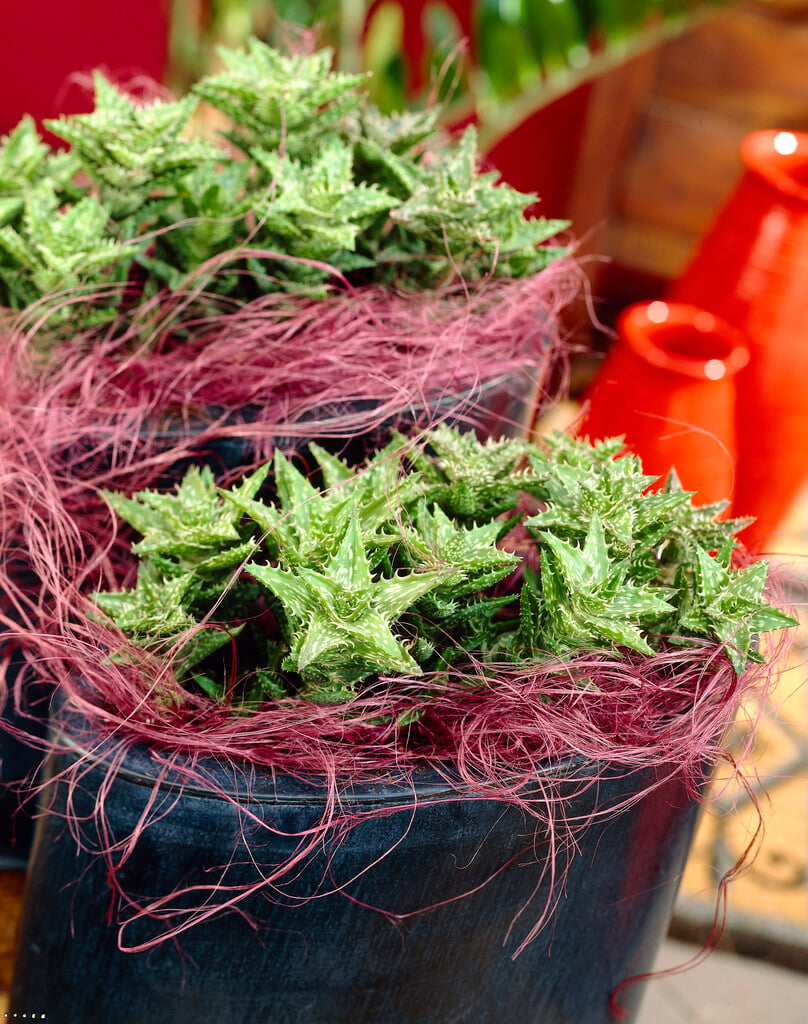
Aloe squarrosa

<em>Aloe</em> <em>squarrosa</em> visionspictures.com

Synonyms

Aloe concinna Baker

Cactus Succulent Conservatory Greenhouse

Prostrate evergreen succulent about 30cm tall, with short stems bearing lance-shaped, strongly recurved, toothed, mid-green leaves speckled white. Unbranched flower stems to 25cm long with tubular red flowers are produced in summer

Position

Full sun

Soil Types

Loam

Max Height

0.1-0.5 metres

Max Spread

0.1-0.5 metres

Size

Time to Maturity
2–5 years
Max Spread
0.1-0.5 metres
Max Height
0.1-0.5 metres

Growing Conditions

Loam
Moisture
Well–drained
pH
Acid or Alkaline or Neutral

Position

Full sun
Aspect
South–facing or West–facing
Exposure
Sheltered
Hardiness
H1B

Colour & Scent

Season Stem Flower Foliage Fruit
Spring
Summer
Autumn
Winter

Botanical Details

Family
Asphodelaceae
Native to GB/Ireland
No
Foliage
Evergreen
Habit
Spreading branched
Potentially harmful
Human/Pets (dogs, cats, rabbits): Harmful if eaten. Wear gloves and other protective equipment when handling For further information and contact numbers regarding pets, see the HTA guide to potentially harmful plants
Genus
Aloe can be mat-forming or shrubby evergreen perennials, with rosettes of fleshy leaves and small tubular flowers in racemes or panicles
Name Status
Correct
Plant Range
Socotra

How to Grow

Cultivation

Grow indoors in a container of peat-free, cacti potting compost, or peat-free, loam-based potting compost with added horticultural grit. Water moderately when in growth, very sparingly when dormant in winter. Apply a general liquid fertiliser monthly from May to August. Can be placed outdoors in summer, see aloe cultivation for further advice

Propagation

Propagate by seed as soon as ripe, or propagate by separating offsets in spring or early summer. Root offsets in cactus potting compost

Suggested planting locations and garden types

  • City and courtyard gardens
  • Coastal
  • Patio and container plants
  • Sub-tropical
  • Houseplants
  • Low Maintenance
  • Conservatory and greenhouse

Pruning

No pruning required

Pests

May be susceptible to scale insects and mealybugs

Diseases

Generally disease-free