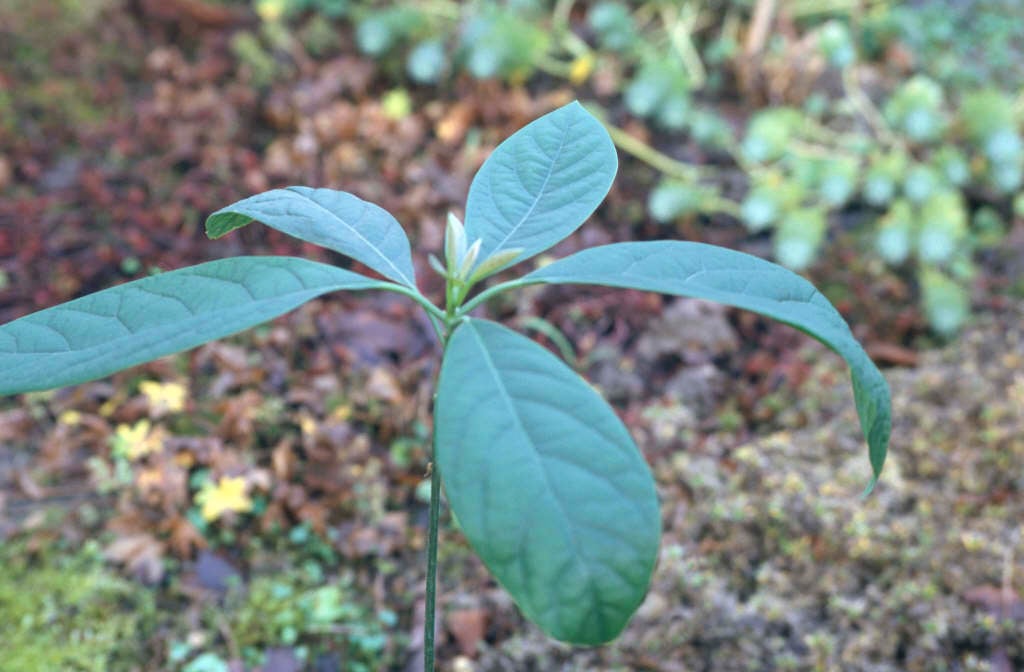
Persea americana

RHS Plant Profile
avocado
avocado RHS 1999

Other common names

aguacate, alligator pear, avocado pear, midshipman's butter, palta, vegetable marrow, West Indian avocado

Conservatory Greenhouse Houseplants Shrubs

A bushy evergreen shrub or small tree, with glossy, lance-shaped or elliptic leaves, rarely flowering in cultivation in temperate climates

Position

Full sun, Partial shade

Soil Types

Loam

Max Height

2.5-4 metres

Max Spread

2.5-4 metres

Size

Time to Maturity
10–20 years
Max Spread
2.5-4 metres
Max Height
2.5-4 metres

Growing Conditions

Loam
Moisture
Moist but well–drained or Well–drained
pH
Neutral

Position

Full sun Partial shade
Aspect
South–facing or West–facing or East–facing
Exposure
Sheltered
Hardiness
H1C

Colour & Scent

Season Stem Flower Foliage Fruit
Spring
Summer
Autumn
Winter

Botanical Details

Family
Lauraceae
Native to GB/Ireland
No
Foliage
Evergreen
Habit
Bushy
Potentially harmful
Pets (rabbits): Leaves TOXIC if eaten Pets (incl. caged birds): Fruit harmful if eaten repeatedly - see the HTA guide to potentially harmful plants for further information and useful contact numbers
Genus
Persea are evergreen shrubs or small trees with simple leaves and small greenish flowers, followed by pear-shaped, dark green fruits with edible flesh
Name Status
Correct
Plant Range
C. America

How to Grow

Cultivation

In temperate climate grow under cover in containers at least 30cm (12in) in diameter using loam-based compost with added sharp sand. Maintain temperatures of 20-28°C (68-82°F) and high humidity. Apply balanced liquid feed every 2-3 weeks

Propagation

Propagate by seed. Soak undamaged seed in hot for 30 minutes at 40-52°C (104-125°F). Cut a thin slice from the pointed end of the seed. Sow individually in moist sandy compost with the cut end slightly above the soil surface and keep at 20-25°C (68-77°F). Cultivars are propagated by grafting

Suggested planting locations and garden types

  • Patio and container plants

Pruning

Pruning group 1

Pests

Glasshouse whitefly, thrips and glasshouse red spider mite and mealybug may be a problem

Diseases

Can suffer from fungal leaf spots and Phytophthora root rot