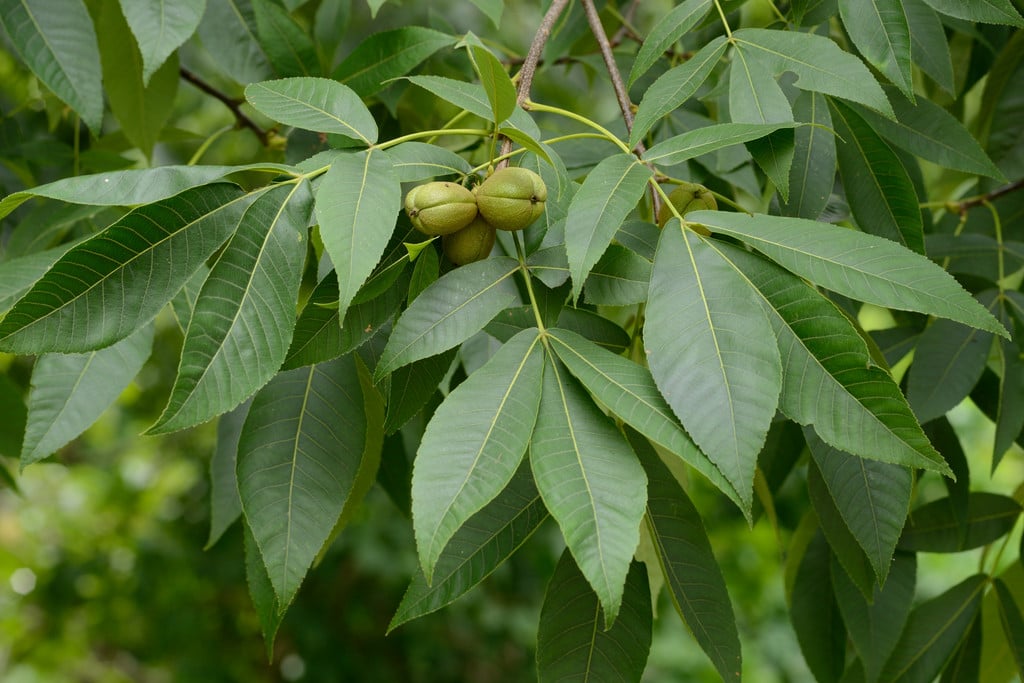
Carya ovata (F)

RHS Plant Profile
shagbark hickory
shagbark hickory RHS

Other common names

little shell-bark hickory, shellbark hickory, shell-bark hickory

Synonyms

Carya alba Nutt.

Trees

A broadly conical, deciduous tree to 20m tall, with ornamental, peeling grey to brown bark. The large leaves usually have five leaflets and turn golden yellow in autumn. Flowers in spring with the male catkins up to 12cm long. Thick-shelled nuts up to 6cm long are edible when ripe

Position

Full sun

Soil Types

Chalk, Loam, Sand

Max Height

Higher than 12 metres

Max Spread

wider than 8 metres

Size

Time to Maturity
20–50 years
Max Spread
wider than 8 metres
Max Height
Higher than 12 metres

Growing Conditions

Chalk Loam Sand
Moisture
Moist but well–drained
pH
Acid or Alkaline or Neutral

Position

Full sun
Aspect
South–facing or West–facing
Exposure
Sheltered
Hardiness
H6

Colour & Scent

Season Stem Flower Foliage Fruit
Spring
Summer
Autumn
Winter

Botanical Details

Family
Juglandaceae
Native to GB/Ireland
No
Foliage
Deciduous
Habit
Bushy
Genus
Carya are vigorous deciduous trees of handsome appearance, the large pinnate leaves colouring well in the autumn; male flowers are in catkins, females are insignificant spikes, followed by nuts, the kernels of some being edible
Name Status
Correct
Horticultural Group
This genus produces fruit, but not necessarily edible fruit
Plant Range
E North America

How to Grow

Cultivation

Grow in deep, fertile, humus rich, moist but well-drained soil in sun or partial shade

Propagation

Propagate by seed sown in situ as soon as ripe; seedlings rapidly develop a deep tap root and resent transplanting

Suggested planting locations and garden types

  • Cottage and informal garden
  • Low Maintenance

Pruning

Pruning group 1

Pests

Generally pest-free

Diseases

May be susceptible to crown gall, powdery mildews and leaf spot (see leaf damage on woody plants)