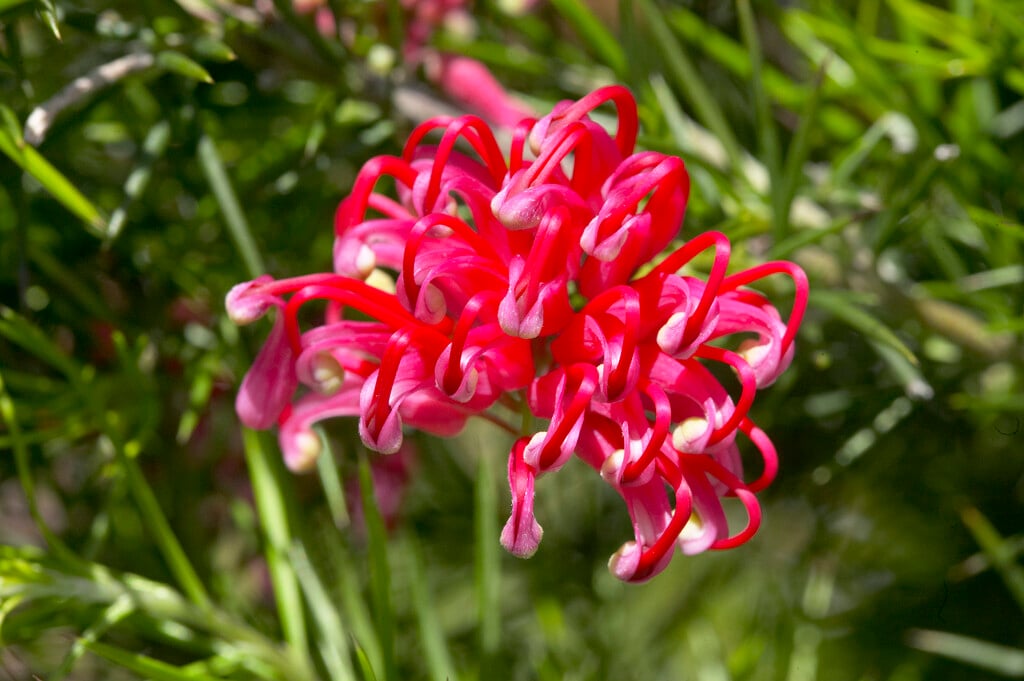
Grevillea juniperina

RHS Plant Profile
juniper-leaf grevillea

Synonyms

Grevillea alpina 'Juniperina'

Shrubs

A dense, rounded, evergreen shrub to 2m tall, with prostrate to upright branches densely clothed with narrowly linear, pointed leaves to 2cm long. From late spring to midsummer it produces clusters of greenish-yellow to red flowers

Position

Full sun

Soil Types

Loam, Sand

Max Height

1.5-2.5 metres

Max Spread

1.5-2.5 metres

Size

Time to Maturity
10–20 years
Max Spread
1.5-2.5 metres
Max Height
1.5-2.5 metres

Growing Conditions

Loam Sand
Moisture
Well–drained
pH
Acid or Neutral

Position

Full sun
Aspect
South–facing or West–facing
Exposure
Sheltered
Hardiness
H4
Drought Resistance
Yes

Colour & Scent

Season Stem Flower Foliage Fruit
Spring
Summer
Autumn
Winter

Botanical Details

Family
Proteaceae
Native to GB/Ireland
No
Foliage
Evergreen
Habit
Bushy
Potentially harmful
Skin irritant/allergen. Wear gloves and other protective equipment when handling Pets: Skin irritant/allergen. For further information and contact numbers regarding pets, see the HTA guide to potentially harmful plants
Genus
Grevillea can be evergreen shrubs or trees, with alternate, simple or pinnately divided leaves and petal-less flowers consisting of a colourful calyx tube with protruding style, borne in racemes or panicles
Name Status
Correct
Plant Range
Australia (New South Wales)

How to Grow

Cultivation

Outdoors, grow in freely-draining, moderately fertile, acid to neutral soil in full sun. Under glass, grow in ericaceous potting compost with added extra grit, in full light. When in growth water freely and apply a low-phosphate liquid fertiliser monthly; water sparingly at other times. Top dress or pot on in spring

Propagation

Propagate by sowing scarified or pre-soaked seed in spring, or by semi-ripe cuttings in summer

Suggested planting locations and garden types

  • City and courtyard gardens
  • Coastal
  • Mediterranean climate plants
  • Low Maintenance
  • Flower borders and beds

Pruning

See pruning group 1

Pests

Generally pest-free

Diseases

May be susceptible to honey fungus (rarely)