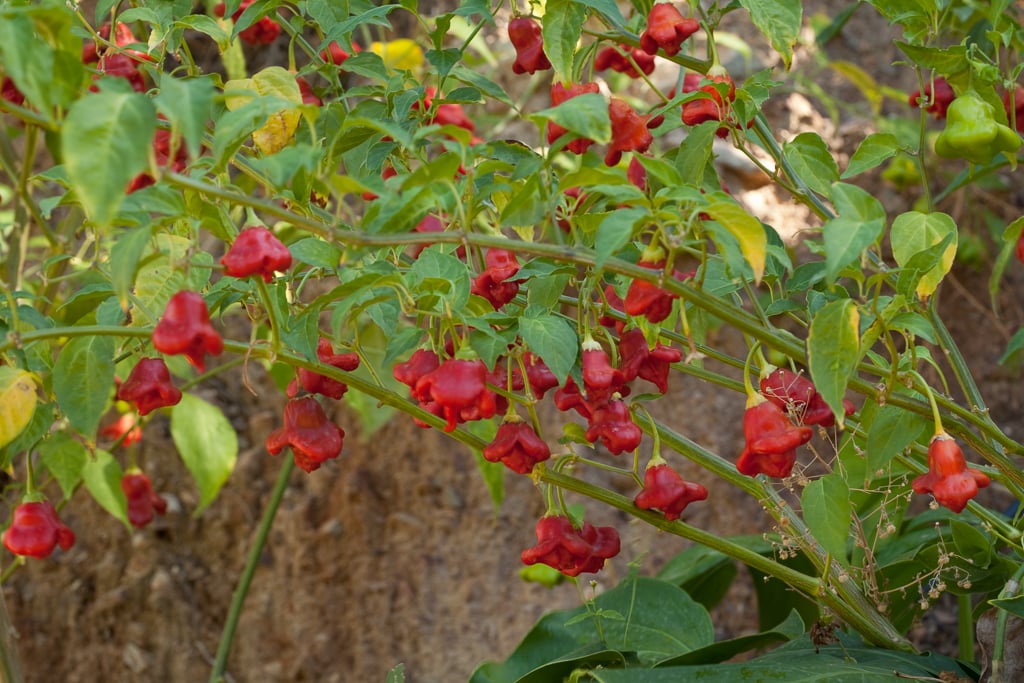
Capsicum chinense 'Scotch Bonnet'

<em>Capsicum</em> <em>chinense</em> 'Scotch Bonnet' John Fielding
Annual Biennial Fruit Edible

A very hot Habanero type chilli pepper cultivar growing around 70cm tall producing fruit typically 2.5-4cm long ripening from green to red. The fruit shape resembles tam o’ shanter flat bonnet. Wear gloves when handling the fruit

Position

Full sun

Soil Types

Loam, Sand

Max Height

0.5-1 metres

Max Spread

0.1-0.5 metres

Size

Time to Maturity
1 year
Max Spread
0.1-0.5 metres
Max Height
0.5-1 metres

Growing Conditions

Loam Sand
Moisture
Moist but well–drained or Well–drained
pH
Acid or Alkaline or Neutral

Position

Full sun
Aspect
South–facing or West–facing
Exposure
Sheltered
Hardiness
H1C

Colour & Scent

Season Stem Flower Foliage Fruit
Spring
Summer
Autumn
Winter

Botanical Details

Family
Solanaceae
Native to GB/Ireland
No
Foliage
Deciduous
Habit
Bushy
Potentially harmful
Humans/Pets: Irritant if eatenskin/eye irritant. Wear gloves and other protective equipment when handling For further information and contact numbers regarding pets, see the HTA guide to potentially harmful plants
Genus
Capsicum are annual or perennial plants, with simple, alternate leaves, and tubular or bell-shaped flowers. They are grown for their glossy, many-seeded edible fruits, including chilli and bell peppers, and as indoor ornamental plants
Name Status
Unresolved

How to Grow

Cultivation

Best grown inside on a sunny windowsill or in a greenhouse, but can be grown outside once all danger of frost has passed; select a sunny, sheltered position and grow in containers, peat-free growing bags or in open ground. Water regularly and feed with a high-potassium, liquid fertiliser once the first fruit has set. See how to grow: chilli peppers for further advice.

Propagation

Propagate by seed in late winter to early spring

Suggested planting locations and garden types

  • Patio and container plants
  • Conservatory and greenhouse
  • Edible fruit

Pruning

No pruning required; pinch out growing tips of plants when they are about 20cm tall to encourage bushiness

Pests

May be susceptible to glasshouse red spider mite, whitefly, aphids, slugs and snails

Diseases

May be susceptible to grey moulds