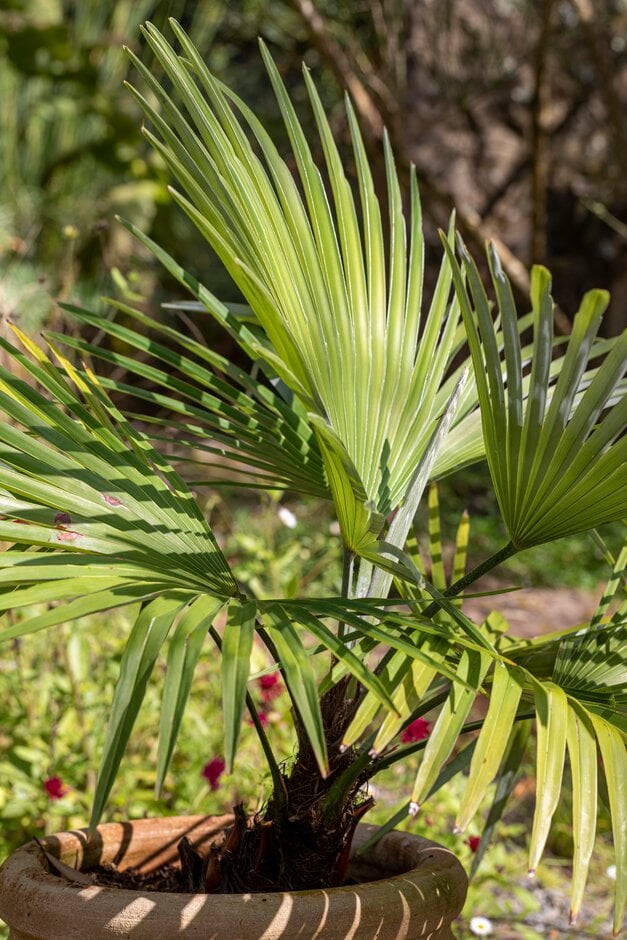
Trachycarpus princeps

RHS Plant Profile
stone gate palm
stone gate palm RHS
Palms

A fan palm with large, evergreen leaves up to 60cm across, waxy-white underneath, and divided into as many as 48 narrow segments. The trunk may retain a loose, fibrous covering of old leaf bases, or these may fall away. Flowering is sparse but mature specimens produce large, branched, yellow-brown clusters of small flowers followed by small, yellow fruit

Position

Full sun, Partial shade

Soil Types

Chalk, Loam, Sand

Max Height

8-12 metres

Max Spread

1.5-2.5 metres

Size

Time to Maturity
20–50 years
Max Spread
1.5-2.5 metres
Max Height
8-12 metres

Growing Conditions

Chalk Loam Sand
Moisture
Well–drained
pH
Acid or Alkaline or Neutral

Position

Full sun Partial shade
Aspect
South–facing or West–facing or East–facing
Exposure
Sheltered
Hardiness
H5
Drought Resistance
Yes

Colour & Scent

Season Stem Flower Foliage Fruit
Spring
Summer
Autumn
Winter

Botanical Details

Family
Arecaceae
Native to GB/Ireland
No
Foliage
Evergreen
Habit
Columnar upright
Genus
Trachycarpus are dioecious evergreen palms with stout, solitary stems bearing rounded leaves palmately divided into linear segments, with pendulous panicles of small flowers followed on female plants by globose fruits
Name Status
Correct
Plant Range
China

How to Grow

Cultivation

Grow in well-drained, fertile soil in full sun or lightly dappled shade. Needs protection from strong or cold, drying winds, strong sunlight when young, and hard, winter frosts. Can also be grown as a conservatory or warm glasshouse specimen. See palm cultivation outdoors and palm cultivation indoors

Propagation

Propagate by seed

Suggested planting locations and garden types

  • Architectural
  • City and courtyard gardens
  • Patio and container plants
  • Mediterranean climate plants

Pruning

Cut off old leaves close to the trunk

Pests

Generally pest-free outdoors; may be susceptible to scale insects, mealybugs and glasshouse red spider mite under glass

Diseases

Generally disease-free