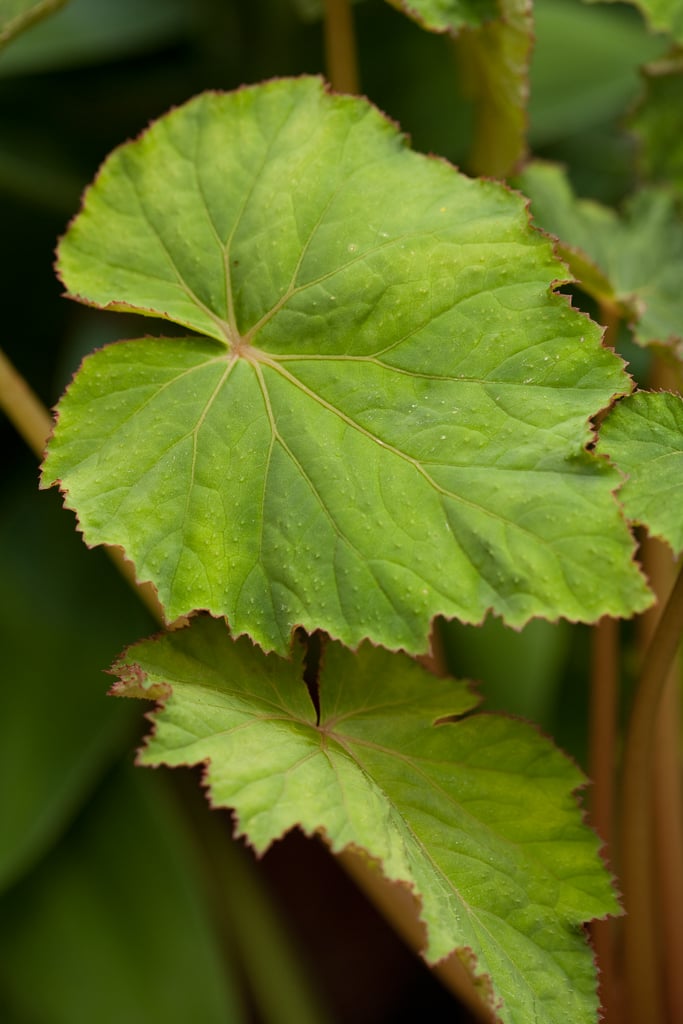
Begonia emeiensis

RHS Plant Profile
Mount Emei begonia
Mount Emei begonia John Fielding
Herbaceous Perennial

A hardy, rhizomatous begonia to 50cm tall, with rounded to heart-shaped, mid-green leaves held on long, succulent leafstalks. In autumn it produces pale pink flowers to 4cm across

Position

Full shade, Partial shade

Soil Types

Clay, Loam, Sand

Max Height

0.1-0.5 metres

Max Spread

0.1-0.5 metres

Size

Time to Maturity
2–5 years
Max Spread
0.1-0.5 metres
Max Height
0.1-0.5 metres

Growing Conditions

Clay Loam Sand
Moisture
Moist but well–drained
pH
Acid or Neutral

Position

Full shade Partial shade
Aspect
East–facing or North–facing
Exposure
Sheltered
Hardiness
H4

Colour & Scent

Season Stem Flower Foliage Fruit
Spring
Summer
Autumn
Winter

Botanical Details

Family
Begoniaceae
Native to GB/Ireland
No
Foliage
Deciduous
Habit
Clump forming
Genus
Begonia can be annuals, evergreen or deciduous perennials or shrubs, with fibrous, tuberous or rhizomatous roots and usually asymmetrical leaves, often strikingly patterned, and small or large flowers, both male and female in the same cluster
Name Status
Correct
Plant Range
China

How to Grow

Cultivation

Grow in humus-rich, moist soil in a lightly to fully shaded position. Provide a deep winter mulch in very cold areas

Propagation

Propagate by division. May also be propagated from the tuberous nodules that form in autumn where the leaf meets the stalk

Suggested planting locations and garden types

  • Cottage and informal garden
  • Patio and container plants
  • Flower borders and beds
  • Wall side borders

Pruning

No pruning required

Pests

May be susceptible to caterpillars, mealy bugs, mites, glasshouse thrips, vine weevil and aphids

Diseases

Generally disease-free