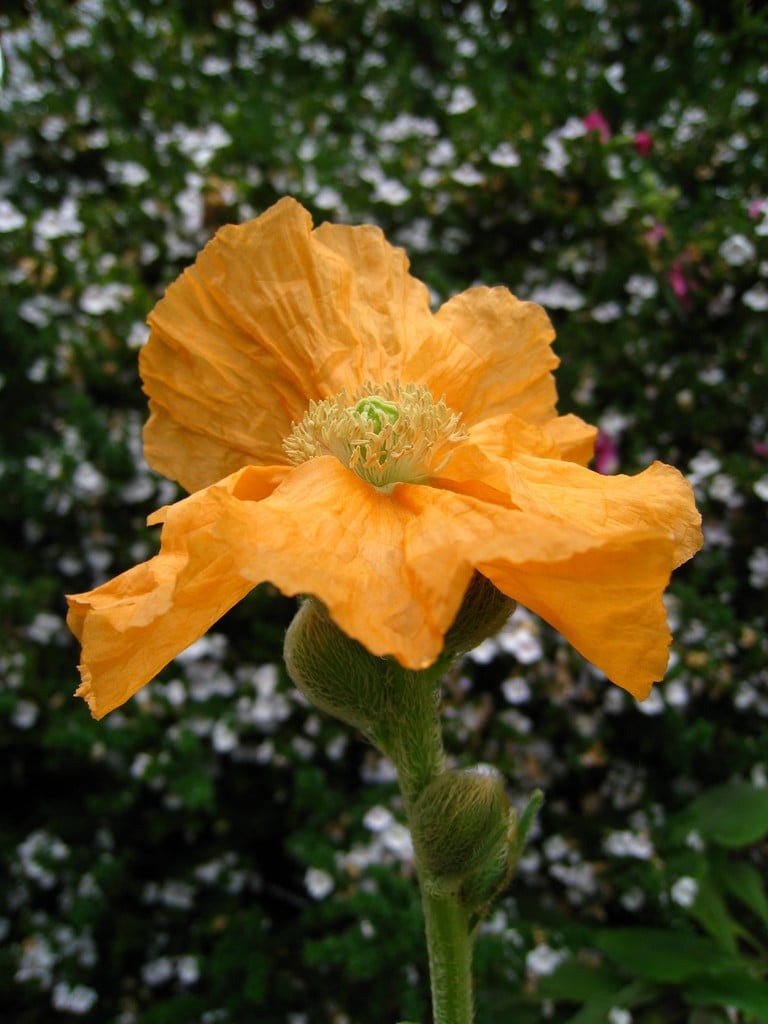
Papaver pilosum subsp. spicatum

RHS Plant Profile
spike-flowered hairy poppy
spike-flowered hairy poppy RHS

Other common names

spiked poppy

Synonyms

Papaver spicatum
Papaver heldreichii

Herbaceous Perennial

A clump-forming perennial with grey-green foliage. The upright flower stems carry several buds, opening one at a time into single, pale orange, papery flowers

Position

Full sun

Soil Types

Chalk, Clay, Loam, Sand

Max Height

0.1-0.5 metres

Max Spread

0.1-0.5 metres

Size

Time to Maturity
2–5 years
Max Spread
0.1-0.5 metres
Max Height
0.1-0.5 metres

Growing Conditions

Chalk Clay Loam Sand
Moisture
Well–drained
pH
Acid or Alkaline or Neutral

Position

Full sun
Aspect
South–facing or West–facing
Exposure
Exposed or Sheltered
Hardiness
H6

Colour & Scent

Season Stem Flower Foliage Fruit
Spring
Summer
Autumn
Winter

Botanical Details

Family
Papaveraceae
Native to GB/Ireland
No
Foliage
Deciduous
Habit
Bushy
Genus
Papaver can be annuals, biennials or herbaceous perennials with simple or pinnately divided leaves and short-lived, saucer-shaped, 4-petalled flowers which may be solitary or in racemes
Name Status
Correct
Plant Range
Asia Minor

How to Grow

Cultivation

Grow in deep, fertile, well-drained soil in a sunny position

Propagation

Propagate by seed sown in containers in a cold frame, or by division, in spring

Suggested planting locations and garden types

  • City and courtyard gardens
  • Cottage and informal garden
  • Gravel garden
  • Patio and container plants
  • Flower borders and beds

Pruning

No pruning required

Pests

May be susceptible to aphids

Diseases

May be susceptible to downy mildews, powdery mildews, fungal wilts and verticillium wilt