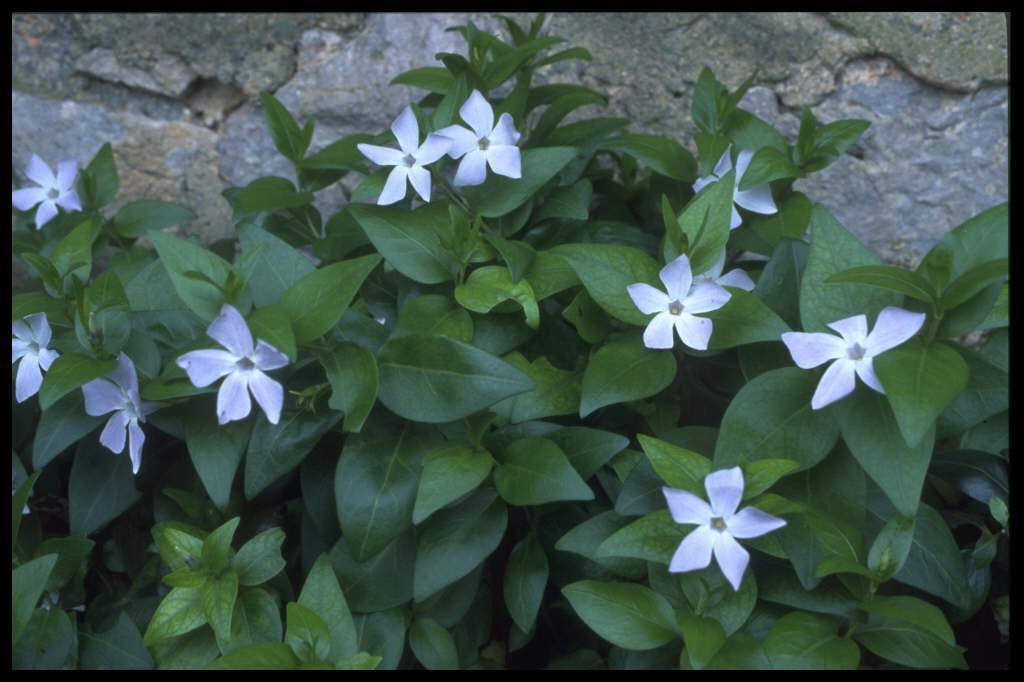
Vinca difformis

RHS Plant Profile
intermediate periwinkle
intermediate periwinkle Mike L. Grant 2002
Shrubs

a vigorous, prostrate evergreen sub-shrub with rooting stems bearing ovate, evergreen leaves, and short upright leafy stems with pale whitish-blue flowers 4cm across, in late winter and early spring

Position

Full shade, Full sun, Partial shade

Soil Types

Chalk, Clay, Loam, Sand

Max Height

0.1-0.5 metres

Max Spread

1-1.5 metres

Size

Time to Maturity
5–10 years
Max Spread
1-1.5 metres
Max Height
0.1-0.5 metres

Growing Conditions

Chalk Clay Loam Sand
Moisture
Moist but well–drained or Poorly–drained or Well–drained
pH
Acid or Alkaline or Neutral

Position

Full shade Full sun Partial shade
Aspect
South–facing or North–facing or West–facing or East–facing
Exposure
Exposed or Sheltered
Hardiness
H4

Colour & Scent

Season Stem Flower Foliage Fruit
Spring
Summer
Autumn
Winter

Botanical Details

Family
Apocynaceae
Native to GB/Ireland
No
Foliage
Evergreen
Habit
Matforming
Genus
Vinca can be evergreen subshrubs or herbaceous perennials, with simple, paired leaves and solitary, 5-lobed, salver-shaped flowers in the leaf axils
Name Status
Correct
Plant Range
N Africa & SW Europe

How to Grow

Cultivation

Easy to grow in all but the driest soils. Flowers best in full sun but very useful for shady areas. Can be invasive

Propagation

Propagate by division in spring or autumn and by semi-hardwood cuttings in summer

Suggested planting locations and garden types

  • Rock garden
  • Ground cover

Pruning

Pruning group 6

Pests

May be susceptible to aphids

Diseases

May be susceptible to a rust