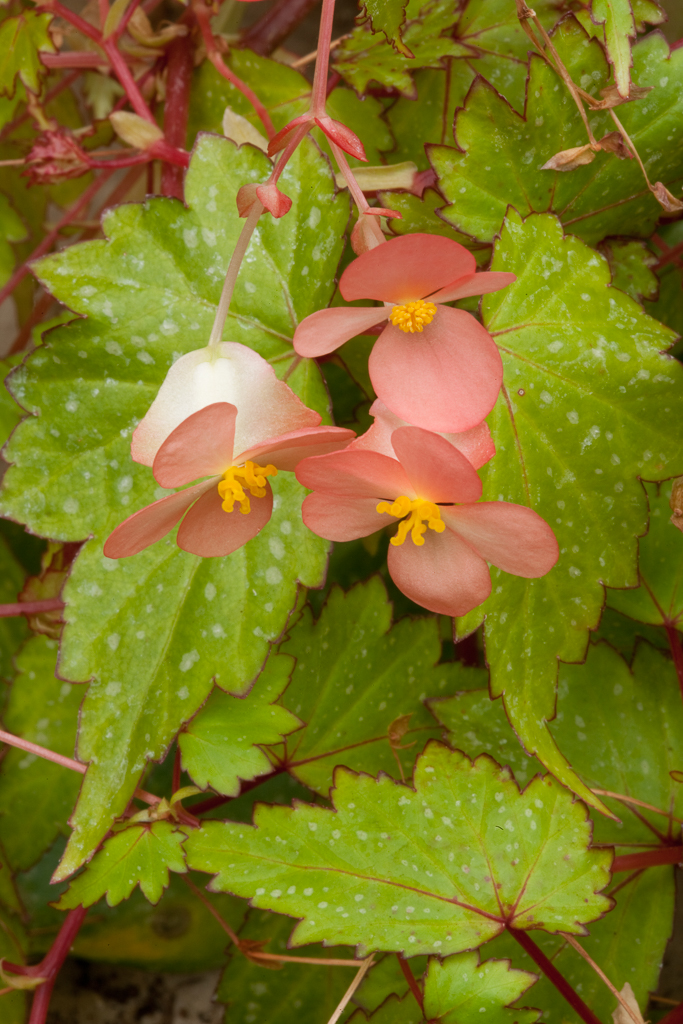
Begonia 'Dibleys Pink Showers'

RHS Plant Profile
begonia 'Dibleys Pink Showers'
begonia 'Dibleys Pink Showers' John Fielding
Award of Garden Merit
Bedding

A half-hardy perennial, often grown as a summer bedding plant, with wavy-margined, maple-like leaves, and a profusion of pink flowers from summer into autumn. Its trailing habit makes it ideal for a container or hanging basket

Position

Full sun, Partial shade

Soil Types

Clay, Loam, Sand

Max Height

0.1-0.5 metres

Max Spread

0.1-0.5 metres

Size

Time to Maturity
1 year
Max Spread
0.1-0.5 metres
Max Height
0.1-0.5 metres

Growing Conditions

Clay Loam Sand
Moisture
Moist but well–drained
pH
Acid or Neutral

Position

Full sun Partial shade
Aspect
East–facing or South–facing or West–facing
Exposure
Sheltered
Hardiness
H1B

Colour & Scent

Season Stem Flower Foliage Fruit
Spring
Summer
Autumn
Winter

Botanical Details

Family
Begoniaceae
Native to GB/Ireland
No
Foliage
Deciduous
Habit
Trailing
Potentially harmful
Ornamental bulbs - not to be eaten. Wear gloves and other protective equipment when handling. Pets: Ornamental bulbs - not to be eaten - see the HTA guide to potentially harmful plants for further information and useful contact numbers
Genus
Begonia can be annuals, evergreen or deciduous perennials or shrubs, with fibrous, tuberous or rhizomatous roots and usually asymmetrical leaves, often strikingly patterned, and small or large flowers, both male and female in the same cluster
Name Status
Accepted

How to Grow

Cultivation

Harden off and plant out after the last frosts into pots of peat-free multi-purpose compost, or into the ground in any fertile garden soil. Position in light dappled shade and keep well-watered. Feed weekly throughout the growing season with a balanced liquid fertiliser. See begonias: outdoors for further information

Propagation

Propagate by sowing seed from mid-January to March at 25°C. Surface sow the seed and lightly firm in; do not cover

Suggested planting locations and garden types

  • City and courtyard gardens
  • Coastal
  • Cottage and informal garden
  • Hanging Basket
  • Patio and container plants
  • Bedding
  • Conservatory and greenhouse

Pruning

No pruning required

Pests

May be susceptible to caterpillars, mealy bugs, mites, glasshouse thrips, vine weevil and aphids

Diseases

May be susceptible to grey moulds and stem rot