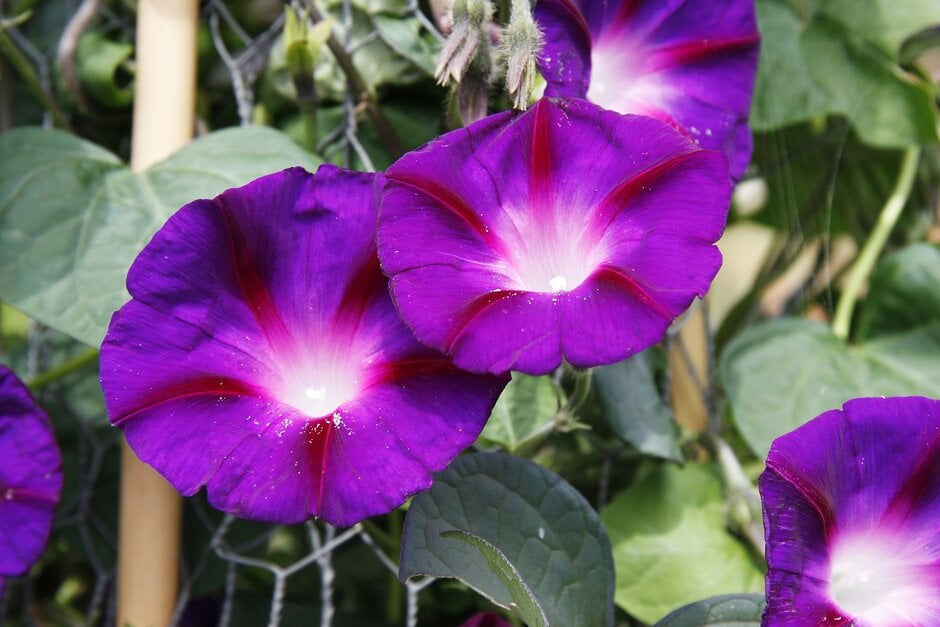
Ipomoea purpurea 'Grandpa Otts'

RHS Plant Profile
morning glory 'Grandpa Otts'
morning glory 'Grandpa Otts' RHS

Synonyms

Ipomoea 'Grandpa Ott'
Ipomoea tricolor 'Grandpa Ott'

Climber Wall Shrub

A short-lived perennial climber, usually grown as an annual, with slender twining stems and heart-shaped green leaves. Funnel-shaped, violet-blue flowers with reddish pink 'stars' are produced from early summer to early autumn

Position

Full sun

Soil Types

Chalk, Loam, Sand

Max Height

2.5-4 metres

Max Spread

1.5-2.5 metres

Size

Time to Maturity
1 year
Max Spread
1.5-2.5 metres
Max Height
2.5-4 metres

Growing Conditions

Chalk Loam Sand
Moisture
Moist but well–drained
pH
Acid or Alkaline or Neutral

Position

Full sun
Aspect
South–facing or West–facing
Exposure
Sheltered
Hardiness
H1C

Colour & Scent

Season Stem Flower Foliage Fruit
Spring
Summer
Autumn
Winter

Botanical Details

Family
Convolvulaceae
Native to GB/Ireland
No
Foliage
Deciduous
Habit
Climbing
Potentially harmful
Harmful if eaten. Wear gloves and other protective equipment when handling. Pets: Harmful if eaten. For further information and contact numbers regarding pets, see the HTA guide to potentially harmful plants
Genus
Ipomoea can be annuals or perennials, often twining, or evergreen shrubs, with simple, lobed or dissected leaves and tubular or funnel-shaped flowers which may be solitary or borne in racemes or panicles
Name Status
Accepted

How to Grow

Cultivation

Thrives in moist but well-drained soil in full sun, minimum temperature 7-10°C. Provide support for climbing stems

Propagation

Propagate by seed. See sowing seeds indoors for further advice

Suggested planting locations and garden types

  • Cottage and informal garden
  • Climber and wall shrubs
  • Wall side borders

Pruning

No pruning required

Pests

May be susceptible to glasshouse whitefly and red spider mite when grown under glass

Diseases

May be susceptible to powdery mildews and virus diseases