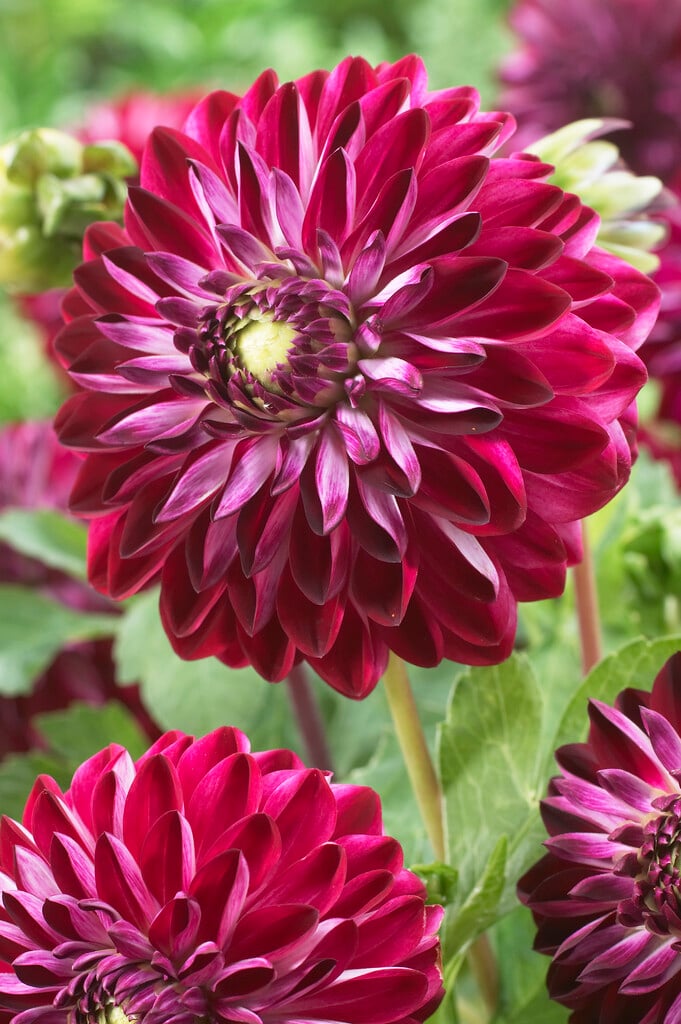
visionspictures.com A bushy, clump-forming, tuberous perennial to around 100cm in height, with dark green leaves. Large, decorative, double dark red to violet flowers with a yellow-green centre appear from June through to September
| Season | Stem | Flower | Foliage | Fruit |
|---|---|---|---|---|
| Spring | ||||
| Summer | ||||
| Autumn | ||||
| Winter |
Grow in fertile, humus-rich, moist but well-drained soil, in full sun. Pinch out growing tips to encourage bushy plants and stake taller dahlias, see staking perennials. Water freely in dry periods. Lift and store tubers in autumn to replant or use as a source of cuttings in spring. See dahlia cultivation
Propagate by softwood cuttings taken in spring from shoots from stored tubers, or divide the tubers ensuring each division has a viable bud
Deadhead spent flowers to encourage further flowering. Cut back to near ground level in autumn, before lifting and storing for the winter
May be susceptible to aphids, leaf miners, glasshouse red spider mite and slugs. Earwigs sometimes damage blooms. Capsid bug and caterpillars are occasional pests
May be susceptible to Powdery mildews in dry conditions. In wet weather grey moulds and other fungal rots can be a problem. Fungal rots can also damage stored tubers. A virus may cause stunting, leaf markings and distortion
The new app packed with trusted gardening know-how
Download app