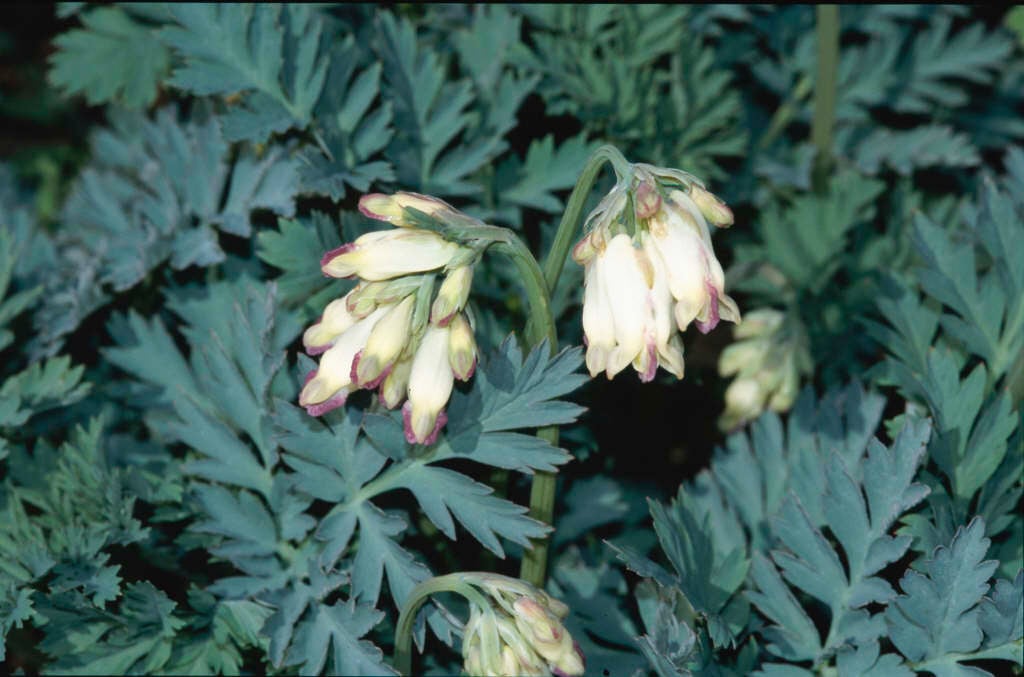
Dicentra formosa 'Langtrees'

RHS Plant Profile
bleeding heart 'Langtrees'
bleeding heart 'Langtrees' RHS 1999

Synonyms

Dicentra 'Langtrees'

Award of Garden Merit
Herbaceous Perennial

'Langtrees' is a spreading perennial to 30cm tall, with finely divided, vividly glaucous leaves and arching sprays of pink-flushed creamy-white flowers in late spring and early summer

Position

Partial shade

Soil Types

Chalk, Clay, Loam

Max Height

0.1-0.5 metres

Max Spread

0.1-0.5 metres

Size

Time to Maturity
2–5 years
Max Spread
0.1-0.5 metres
Max Height
0.1-0.5 metres

Growing Conditions

Chalk Clay Loam
Moisture
Moist but well–drained or Poorly–drained
pH
Alkaline or Neutral

Position

Partial shade
Aspect
East–facing or North–facing or West–facing
Exposure
Sheltered
Hardiness
H5

Colour & Scent

Season Stem Flower Foliage Fruit
Spring
Summer
Autumn
Winter

Botanical Details

Family
Papaveraceae
Native to GB/Ireland
No
Foliage
Deciduous
Habit
Bushy
Potentially harmful
All parts cause stomach ache if ingested, the foliage may aggravate skin allergies. Wear gloves and other protective equipment when handling
Genus
Dicentra can be rhizomatous or tuberous perennials with attractively divided leaves and pendent, heart-shaped flowers, usually in arching panicles or racemes
Name Status
Accepted

How to Grow

Cultivation

Grow in moist, fertile, humus-rich soil, preferably neutral or slightly alkaline; site in partial shade although will tolerate sun if the soil is moist

Propagation

Propagate by division in early spring or after the leaves have died down

Suggested planting locations and garden types

  • City and courtyard gardens
  • Coastal
  • Cottage and informal garden
  • Flower borders and beds
  • Banks and slopes
  • Garden edging
  • Underplanting of roses and shrubs

Pruning

No pruning required

Pests

Generally pest-free

Diseases

Generally disease-free