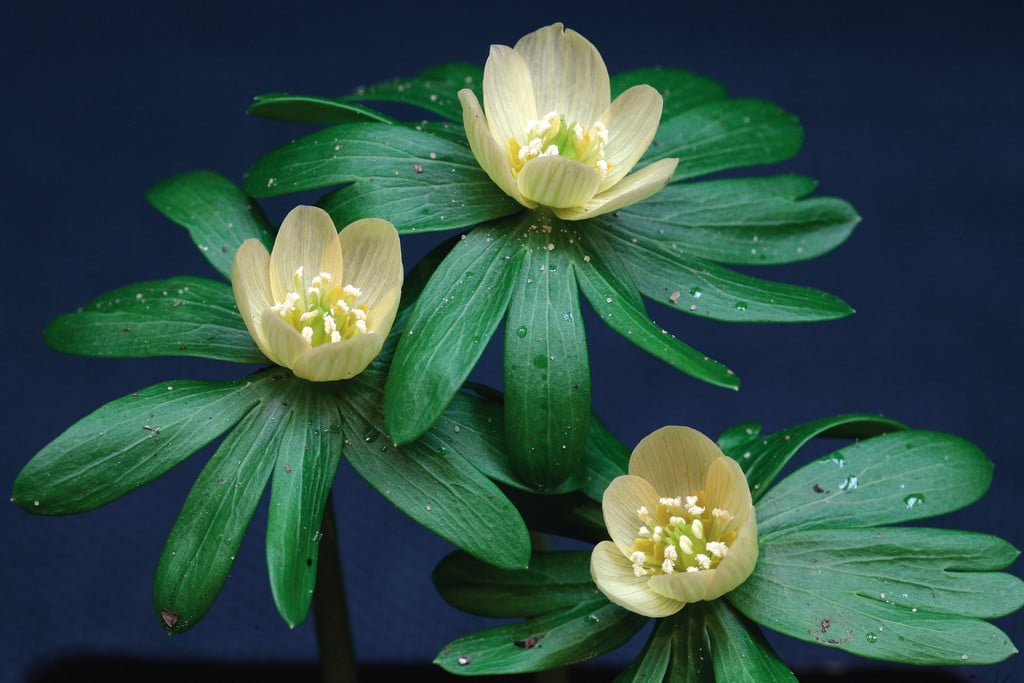
Eranthis hyemalis 'Schwefelglanz'

RHS Plant Profile
winter aconite 'Schwefelglanz'
winter aconite 'Schwefelglanz' RHS

Synonyms

Eranthis 'Schwefelglanz'

Plants for pollinators
Bulbs

a herbaceous perennial, up to 15cm high, with bright green lobed leaves that open after the cup-shaped flowers. Flowers are made up of six, pale sulphur-yellow petals surrounded by bright green "ruffs" of bracts in winter and early spring

Position

Full sun, Partial shade

Soil Types

Chalk, Clay, Loam, Sand

Max Height

0.1-0.5 metres

Max Spread

0.1-0.5 metres

Size

Time to Maturity
2–5 years
Max Spread
0.1-0.5 metres
Max Height
0.1-0.5 metres

Growing Conditions

Chalk Clay Loam Sand
Moisture
Moist but well–drained
pH
Alkaline or Neutral

Position

Full sun Partial shade
Aspect
North–facing or West–facing or South–facing or East–facing
Exposure
Sheltered
Hardiness
H6

Colour & Scent

Season Stem Flower Foliage Fruit
Spring
Summer
Autumn
Winter

Botanical Details

Family
Ranunculaceae
Native to GB/Ireland
No
Foliage
Deciduous
Habit
Clump forming
Potentially harmful
Pets: Harmful if eaten. For further information and contact numbers regarding pets, see the HTA guide to potentially harmful plants
Genus
Eranthis are small tuberous perennials with palmately or pinnately lobed basal leaves and cup-shaped flowers held above a collar of deeply lobed stem leaves
Name Status
Accepted

How to Grow

Cultivation

Grow in partial shade in soil which remains moist until midsummer and then becomes drier; will naturalise best in well-drained but humus-rich, moisture-retentive alkaline soil under deciduous trees or shrubs or in short lawns. Can be difficult to establish from dry tubers, so plant "in the green"

Propagation

Propagate by division in spring after flowering

Suggested planting locations and garden types

  • City and courtyard gardens
  • Cottage and informal garden
  • Wildlife gardens
  • Cut flowers
  • Flower borders and beds
  • Underplanting of roses and shrubs

Pruning

No pruning required

Pests

May be susceptible to slugs

Diseases

May be susceptible to smuts