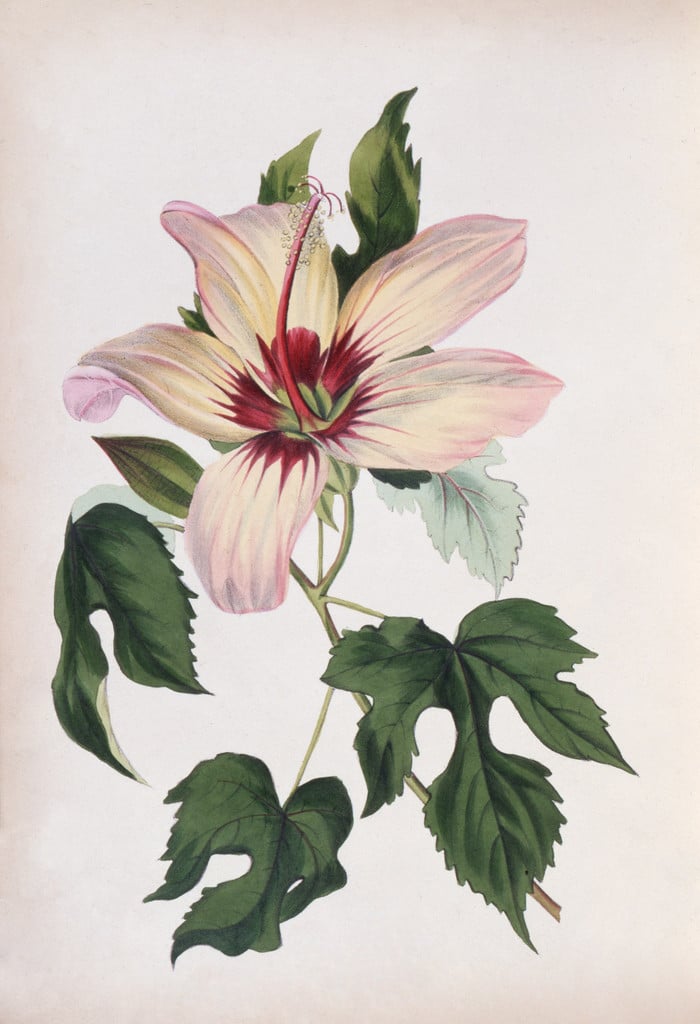
Abelmoschus manihot

RHS Plant Profile
edible hibiscus
edible hibiscus RHS

Other common names

aibika

Synonyms

Hibiscus manihot

Herbaceous Perennial Annual Biennial

A tropical perennial normally grown as an annual in temperate areas, producing a large clump of five- or seven-fingered leaves. The flowers, in spires, open one at a time and are up to 15cm across, lemon yellow with a dark purple eye. They are followed by green, hairy seed pods

Position

Full sun

Soil Types

Clay, Loam, Sand

Max Height

1.5-2.5 metres

Max Spread

0.5-1 metres

Size

Time to Maturity
1 year
Max Spread
0.5-1 metres
Max Height
1.5-2.5 metres

Growing Conditions

Clay Loam Sand
Moisture
Moist but well–drained
pH
Acid or Alkaline or Neutral

Position

Full sun
Aspect
South–facing
Exposure
Sheltered
Hardiness
H2

Colour & Scent

Season Stem Flower Foliage Fruit
Spring
Summer
Autumn
Winter

Botanical Details

Family
Malvaceae
Native to GB/Ireland
No
Foliage
Deciduous
Habit
Bushy
Genus
Abelmoschus are hairy annuals or perennials with large, usually palmately-lobed leaves and 5-petalled, hibiscus-like, flowers borne in the leaf axils or in terminal racemes
Name Status
Correct
Plant Range
SE Asia

How to Grow

Cultivation

Start off under glass and plant out in a sunny, sheltered position with well-drained, fertile soil, after all frost risk has passed

Propagation

Propagate by seed, or by softwood cuttings in early summer

Suggested planting locations and garden types

  • Sub-tropical
  • Cottage and informal garden
  • Flower borders and beds
  • Wall side borders

Pruning

Cut back stems as they finish flowering

Pests

May be susceptible to slugs, snails, glasshouse red spider mite and glasshouse whitefly

Diseases

Susceptible to powdery mildews