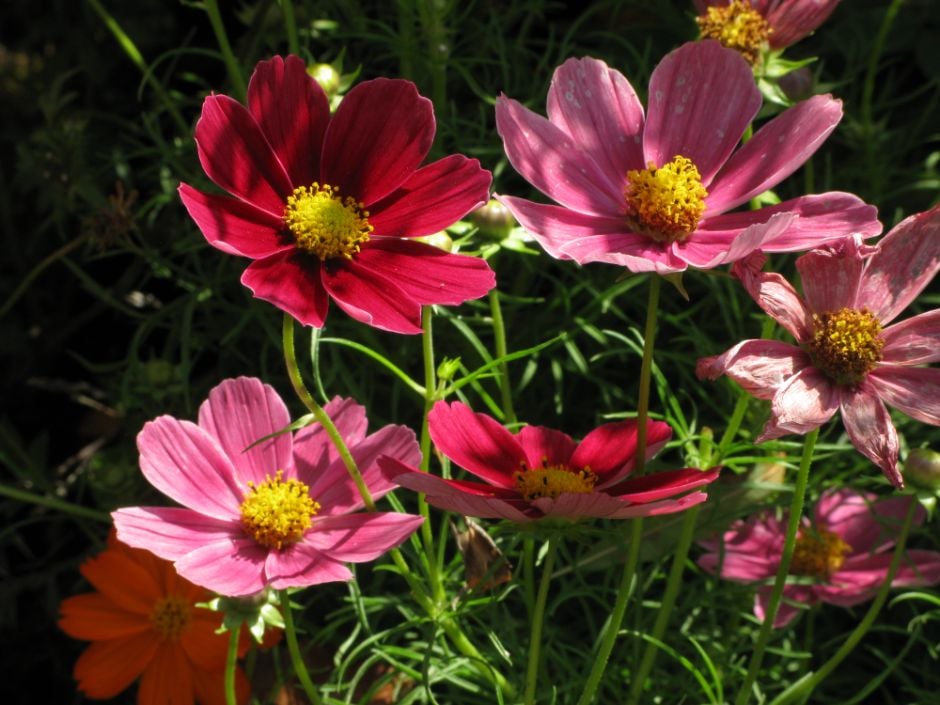
Cosmos bipinnatus 'Antiquity'

RHS Plant Profile
cosmea 'Antiquity'
cosmea 'Antiquity' RHS
Plants for pollinators
Annual Biennial

An upright, bushy annual to 60cm in height with finely-divided, bright green leaves from summer to autumn. During summer short, upright stems bear daisy-like, crimson to burgundy flowers fading to reddish-pink with age

Position

Full sun

Soil Types

Chalk, Loam, Sand, Clay

Max Height

0.5-1 metres

Max Spread

0.5-1 metres

Size

Time to Maturity
1–2 years
Max Spread
0.5-1 metres
Max Height
0.5-1 metres

Growing Conditions

Chalk Loam Sand Clay
Moisture
Moist but well–drained
pH
Acid or Alkaline or Neutral

Position

Full sun
Aspect
South–facing or West–facing
Exposure
Exposed or Sheltered
Hardiness
H3

Colour & Scent

Season Stem Flower Foliage Fruit
Spring
Summer
Autumn
Winter

Botanical Details

Family
Asteraceae
Native to GB/Ireland
No
Foliage
Deciduous
Habit
Columnar upright
Genus
Cosmos can be annuals or perennials with simple or pinnately divided leaves and large, long-stalked daisy-like flowers in summer
Name Status
Unresolved

How to Grow

Cultivation

Grow in moderately fertile, moist but well-drained soil in full sun. Deadhead flowers to prologue flowering season. Leave a few seedheads to ripen to selfseed if required. A relatively compact grower so most likely will not need staking

Propagation

See sowing seeds indoors

Suggested planting locations and garden types

  • City and courtyard gardens
  • Cottage and informal garden
  • Patio and container plants
  • Wildlife gardens
  • Cut flowers
  • Flower borders and beds
  • Underplanting of roses and shrubs

Pruning

Deadhead to prolong the flowering season

Pests

May be susceptible to aphids and slugs

Diseases

May be susceptible to grey moulds