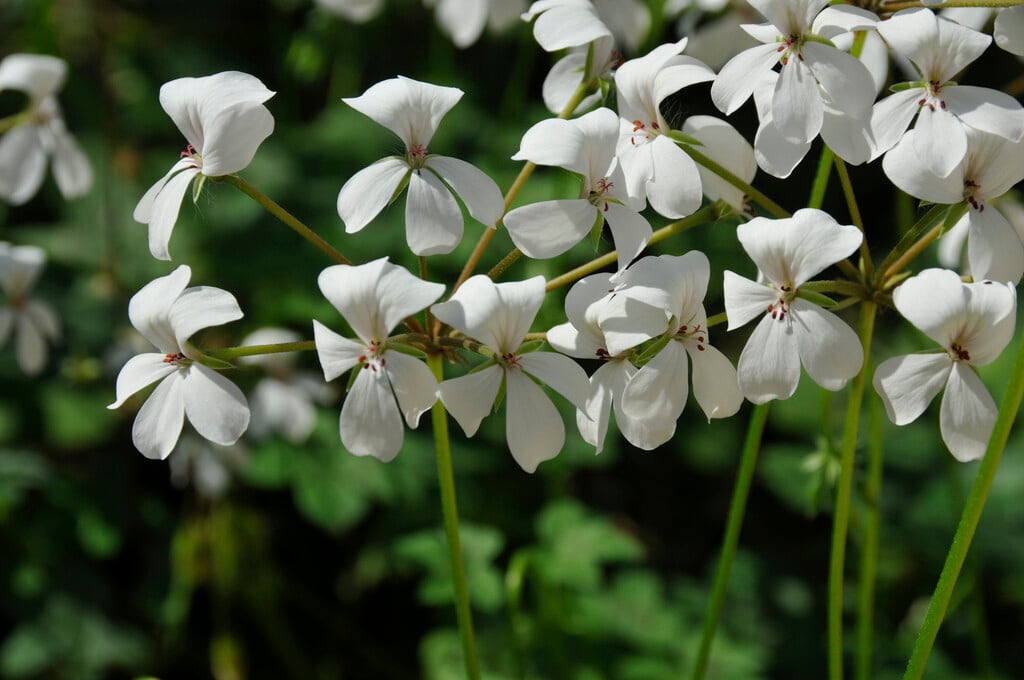
Pelargonium alchemilloides

RHS Plant Profile
lady's mantle geranium
lady's mantle geranium visionspictures.com

Synonyms

Pelargonium malvaefolium

Herbaceous Perennial

A low-growing, evergreen perennial with a sprawling habit and lobed, slightly hairy green leaves sometimes marked with bronze. Loose clusters of flowers, with narrow white or pale pink petals, are borne on upright stems in late spring and summer

Position

Full sun, Partial shade

Soil Types

Chalk, Clay, Loam, Sand

Max Height

0.1-0.5 metres

Max Spread

0.1-0.5 metres

Size

Time to Maturity
2–5 years
Max Spread
0.1-0.5 metres
Max Height
0.1-0.5 metres

Growing Conditions

Chalk Clay Loam Sand
Moisture
Moist but well–drained or Well–drained
pH
Acid or Alkaline or Neutral

Position

Full sun Partial shade
Aspect
East–facing or North–facing or South–facing or West–facing
Exposure
Exposed or Sheltered
Hardiness
H4
Drought Resistance
Yes

Colour & Scent

Season Stem Flower Foliage Fruit
Spring
Summer
Autumn
Winter

Botanical Details

Family
Geraniaceae
Native to GB/Ireland
No
Foliage
Evergreen
Habit
Spreading branched
Genus
Pelargonium can be perennials, sub-shrubs or shrubs, sometimes succulent and mostly evergreen, with palmately lobed or pinnately divided leaves and clusters of slightly irregular, 5-petalled flowers
Name Status
Correct
Plant Range
S Africa

How to Grow

Cultivation

Tolerates a range of soils and positions, including drought. May be deciduous in cold or very dry areas

Propagation

Propagate by seed, by division of tuberous roots, or by softwood cuttings. Plants can self-seed prolifically; in some parts of the world this species is considered a weed

Suggested planting locations and garden types

  • Cottage and informal garden
  • Mediterranean climate plants
  • Wildflower meadow

Pruning

No pruning required

Pests

May be susceptible to vine weevil, root mealybugs and aphids

Diseases

May be susceptible to grey moulds, Pelargonium rust and pelargonium viruses