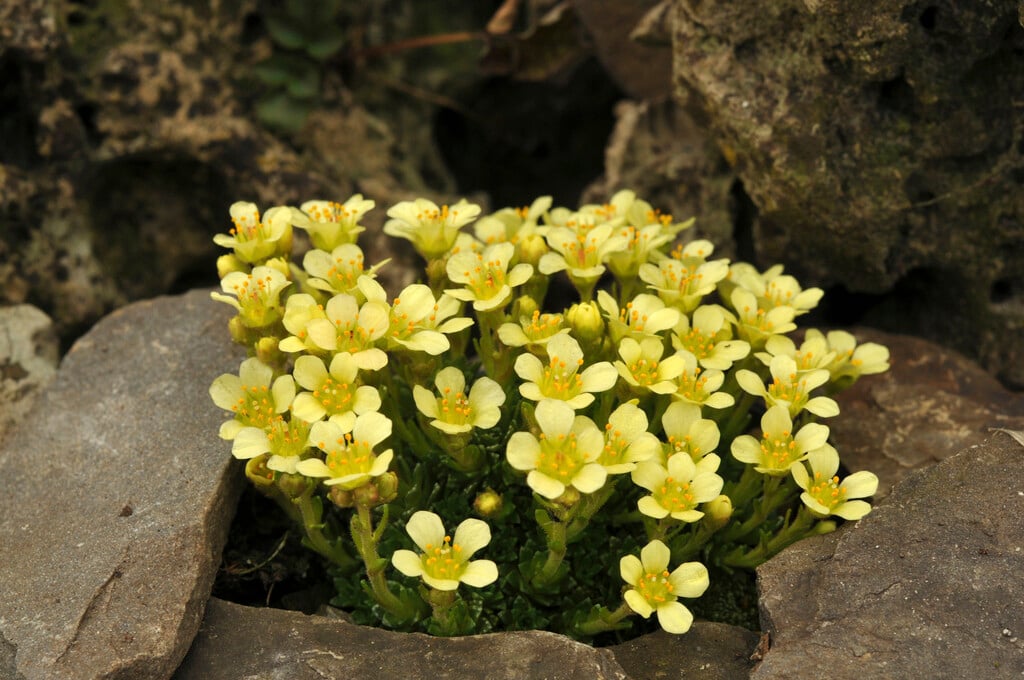
Size
Ultimate height
0.1–0.5 metresTime to ultimate height
2–5 yearsUltimate spread
0.1–0.5 metresGrowing conditions
Moisture
Moist but well–drained, Well–drainedpH
Alkaline, NeutralColour & scent
| Stem | Flower | Foliage | Fruit | |
| Spring | Yellow | Green Grey Silver | ||
|---|---|---|---|---|
| Summer | Green Grey Silver | |||
| Autumn | Green Grey Silver | |||
| Winter | Green Grey Silver |
Position
- Partial shade
Aspect
East–facing
Exposure
Sheltered Hardiness
H5Botanical details
- Family
- Saxifragaceae
- Native to GB / Ireland
- No
- Foliage
- Evergreen
- Habit
- Matforming
- Genus
Saxifraga can be annuals, biennials, evergreen or herbaceous perennials, mostly mat-forming in habit, with simple or palmately lobed leaves and starry or rounded flowers which may be solitary of in panicles or cymes
- Name status
Unresolved
- Horticultural Group
- Saxifraga section saxifrages are mat-forming evergreen perennials with small, lobed leaves and 5-petalled white, pink, yellow or red flowers in small clusters on erect stems in late spring or early summer
How to grow
Cultivation
Grow in fertile, neutral to alkaline soil, in bright filtered light or with shade from hot afternoon sun. Keep roots moist in summer but protect from excess winter wet. Ideal for a container or alpine house
Propagation
Propagate by division in spring or detach rosettes and root in late spring to early summer
Suggested planting locations and garden types
- City and courtyard gardens
- Cottage and informal garden
- Patio and container plants
- Rock garden
- Conservatory and greenhouse
- Garden edging
Pruning
No pruning required
Pests
May be susceptible to aphids, slugs, vine weevil, and glasshouse red spider mite
Diseases
Generally disease-free
Get involved
The Royal Horticultural Society is the UK’s leading gardening charity. We aim to enrich everyone’s life through plants, and make the UK a greener and more beautiful place.
