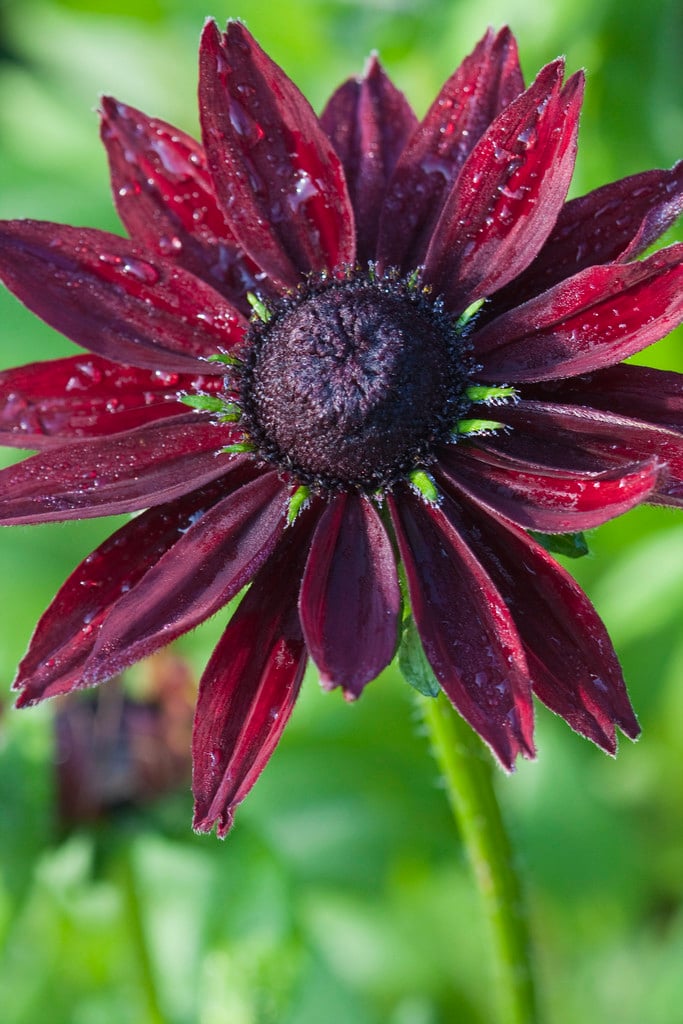
Rudbeckia hirta 'Cherry Brandy'

RHS Plant Profile
black-eyed Susan 'Cherry Brandy'
black-eyed Susan 'Cherry Brandy' RHS

Synonyms

Rudbeckia hirta 'Cherry'

Plants for pollinators
Annual Biennial

An erect biennial with bristly stems and leaves and classic daisy-shaped flowerheads, to 60cm tall, from June through to autumn, in warm red shades

Position

Full sun

Soil Types

Clay, Loam

Max Height

0.5-1 metres

Max Spread

0.1-0.5 metres

Size

Time to Maturity
1–2 years
Max Spread
0.1-0.5 metres
Max Height
0.5-1 metres

Growing Conditions

Clay Loam
Moisture
Moist but well–drained
pH
Acid or Alkaline or Neutral

Position

Full sun
Aspect
West–facing or South–facing or East–facing
Exposure
Exposed or Sheltered
Hardiness
H3

Colour & Scent

Season Stem Flower Foliage Fruit
Spring
Summer
Autumn
Winter

Botanical Details

Family
Asteraceae
Native to GB/Ireland
No
Foliage
Deciduous
Habit
Columnar upright
Genus
Rudbeckia may be annuals, biennials or rhizomatous herbaceous perennials, with simple or pinnately divided leaves and large daisy-like flower-heads with yellow or orange rays surrounding a prominent conical disk
Name Status
Unresolved

How to Grow

Cultivation

Best grown as half-hardy annuals. Easily raised from seed, plant out in late spring after danger of frost has passed. Will not normally survive the winter's cold and wet

Propagation

Propagate by seed sown with gentle heat in Spring

Suggested planting locations and garden types

  • Cottage and informal garden
  • Patio and container plants
  • Wildlife gardens
  • Cut flowers
  • Flower borders and beds

Pruning

Deadhead spent flowers

Pests

Generally pest-free

Diseases

May suffer from grey moulds if air circulation is poor during propagation or in the border