Arbutus × thuretiana

<i>Arbutus</i> × <i>thuretiana</i> visionspictures.com
Shrubs Trees

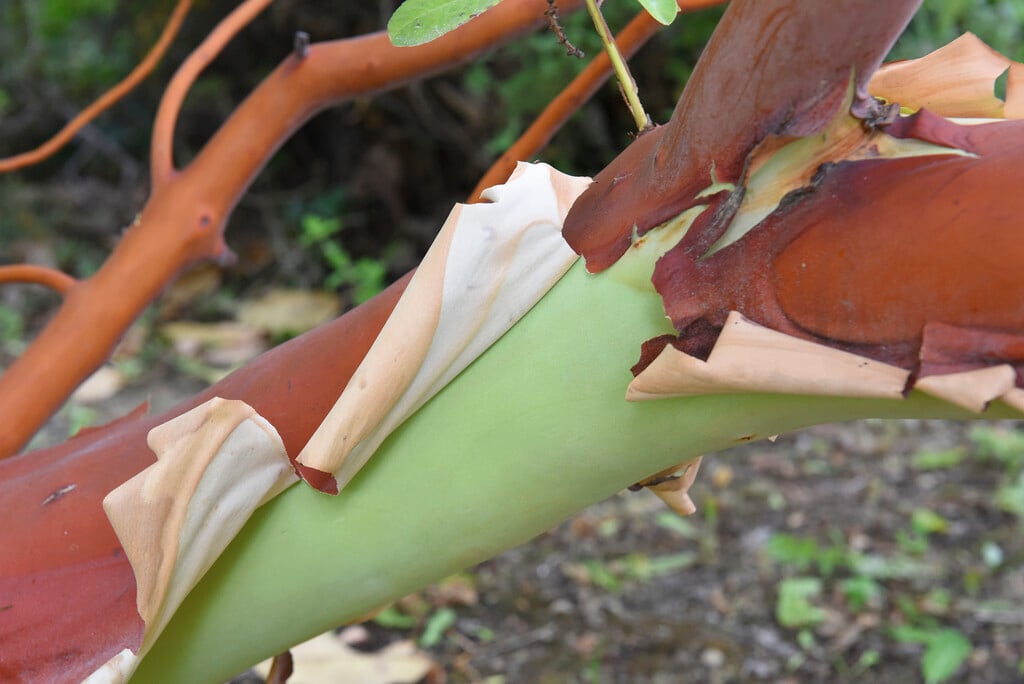
A slow-growing, large, spreading evergreen tree or small shrub which can reach a height of around 12m in favourable conditions, but nearer to 6m in general, with large, dark green, finely toothed, spreading foliage on red stems. The smooth bark is red and peels to reveal beautiful shades of pale beige-pink, turning darker in sunlight. Clusters of creamy-white flowers, flushed with pink, appear in spring, followed by round, grooved orange-red berries in the autumn which, whilst in theory are edible, are not particularly pleasant in taste. A stunning addition to a larger garden or parkland which provides year-round interest. Drought-tolerant once established. A hybrid of A. canariensis and A. andrachne

Position

Full sun, Partial shade

Soil Types

Chalk, Loam, Sand

Max Height

8-12 metres

Max Spread

2.5-4 metres

Size

Time to Maturity
10–20 years
Max Spread
2.5-4 metres
Max Height
8-12 metres

Growing Conditions

Chalk Loam Sand
Moisture
Moist but well–drained or Well–drained
pH
Acid or Alkaline or Neutral

Position

Full sun Partial shade
Aspect
South–facing or West–facing
Exposure
Sheltered
Hardiness
H4
Drought Resistance
Yes

Colour & Scent

Season Stem Flower Foliage Fruit
Spring
Summer
Autumn
Winter

Botanical Details

Family
Ericaceae
Native to GB/Ireland
No
Foliage
Evergreen
Habit
Spreading branched
Potentially harmful
Whilst the fruits are generally considered edible, the fruit is not particularly palatable, and plants in the UK are grown for ornamental, rather than edible use Pets: Fruit are ornamental - not to be eaten - see the HTA guide to potentially harmful plants for further information and useful contact numbers
Genus
Arbutus are evergreen trees and shrubs with small, bell-shaped creamy-white or pink flowers, and red, strawberry-like fruits in autumn
Name Status
Correct

How to Grow

Cultivation

Grow in well drained soil in full sun, plants dislike shade and waterlogging, although will cope with dappled shade. Young plants may need winter protection in areas prone to hard frosts. Some drought tolerance once established

Propagation

Propagate by semi-ripe cuttings in late summer

Suggested planting locations and garden types

  • Architectural
  • Cottage and informal garden
  • Mediterranean climate plants
  • Wildlife gardens
  • Edible fruit

Pruning

pruning group 1 but keep pruning to a minimum

Pests

May be susceptible to aphids

Diseases

May be susceptible to Arbutus leaf spot and honey fungus