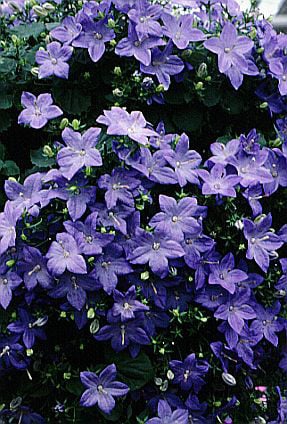
Campanula isophylla

RHS Plant Profile
Italian bellflower
Italian bellflower Dorling Kindersley 2003

Other common names

falling stars, Ligurian harebell, star bellflower, Jerusalem star, star of Bethlehem

Synonyms

Campanula floribunda

Award of Garden Merit
Herbaceous Perennial Conservatory Greenhouse

A trailing perennial to 20cm in height, with soft stems bearing small, heart-shaped pale green leaves and upright saucer-shaped, light blue or white flowers 3.5cm across in summer

Position

Full sun, Partial shade

Soil Types

Chalk, Loam, Sand

Max Height

0.1-0.5 metres

Max Spread

0.1-0.5 metres

Size

Time to Maturity
2–5 years
Max Spread
0.1-0.5 metres
Max Height
0.1-0.5 metres

Growing Conditions

Chalk Loam Sand
Moisture
Well–drained
pH
Acid or Alkaline or Neutral

Position

Full sun Partial shade
Aspect
North–facing or West–facing or South–facing or East–facing
Exposure
Exposed or Sheltered
Hardiness
H2

Colour & Scent

Season Stem Flower Foliage Fruit
Spring
Summer
Autumn
Winter

Botanical Details

Family
Campanulaceae
Native to GB/Ireland
No
Foliage
Deciduous
Habit
Trailing
Genus
Campanula may be annuals, herbaceous or evergreen perennials, with bell or star-shaped, often blue, flowers in late spring or summer
Name Status
Correct
Plant Range
N Italy

How to Grow

Cultivation

A tender perennial and so ideal for a hanging basket or a container that is kept outside in summer and brought undercover when frosts are likely. Apply a balanced liquid feed every month during growing season; in winter keep compost moist. In frost-free a

Propagation

Propagate by softwood cuttings taken in early spring, root with bottom heat

Suggested planting locations and garden types

  • Cottage and informal garden
  • Patio and container plants
  • Mediterranean climate plants
  • City and courtyard gardens
  • Hanging Basket
  • Coastal
  • Sub-tropical
  • Conservatory and greenhouse

Pruning

Cut dead stems to the base before winter

Pests

Damaged by slugs and snails outdoors, also aphids, vine weevil and glasshouse red spider mite under glass

Diseases

May be susceptible to a rust, powdery mildews and a leaf spot