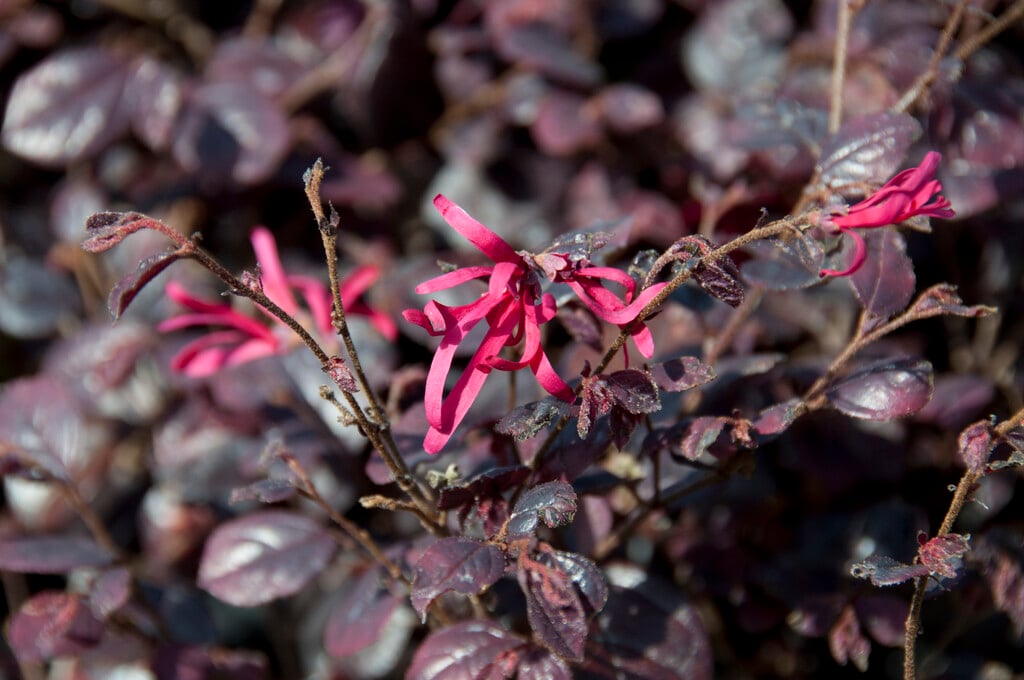
Loropetalum chinense var. rubrum 'Pearl'PBR

RHS Plant Profile
Chinese witch hazel 'Pearl'
Chinese witch hazel 'Pearl' visionspictures.com

Synonyms

Loropetalum chinense var. rubrum 'Black Pearl'
Loropetalum chinense Black Pearl

Shrubs

A semi-evergreen shrub to around 1.5m high, with a spreading habit and oval-shaped, leathery dark purple-brown leaves. Scented, tassel-like bright reddish-pink flowers with long narrow petals are produced in late winter and early spring

Position

Full sun

Soil Types

Clay, Loam, Sand

Max Height

1-1.5 metres

Max Spread

1-1.5 metres

Size

Time to Maturity
5–10 years
Max Spread
1-1.5 metres
Max Height
1-1.5 metres

Growing Conditions

Clay Loam Sand
Moisture
Moist but well–drained
pH
Acid or Neutral

Position

Full sun
Aspect
South–facing or West–facing
Exposure
Sheltered
Hardiness
H3

Colour & Scent

Fragrance Flower
Season Stem Flower Foliage Fruit
Spring
Summer
Autumn
Winter

Botanical Details

Family
Hamamelidaceae
Native to GB/Ireland
No
Foliage
Evergreen
Habit
Bushy, Spreading branched
Genus
Loropetalum are evergreen, free-flowering, shrubs with star-shaped hairs. Flowers are in clusters at the end of short branches, with thin, strap-like petals similar to those of their witch hazel relatives, and also produced in late winter and early spring
Name Status
Accepted

How to Grow

Cultivation

Grow in fertile, humus-rich, moist but well-drained soil, in a sunny spot with shelter from cold winds. May need watering in dry spells in summer. Not suitable for waterlogged or shallow chalk soils. Best with winter protection or overwintered in a cold greenhouse

Propagation

Propagate by rooting semi-ripe cuttings with bottom heat in summer. As this plant is protected by Plant Breeders' Rights, any propagation should be for personal rather than commercial use

Suggested planting locations and garden types

  • City and courtyard gardens
  • Cottage and informal garden
  • Patio and container plants
  • Flower borders and beds
  • Wall side borders

Pruning

Minimal pruning required, see pruning group 8

Pests

Generally pest-free

Diseases

Generally disease-free