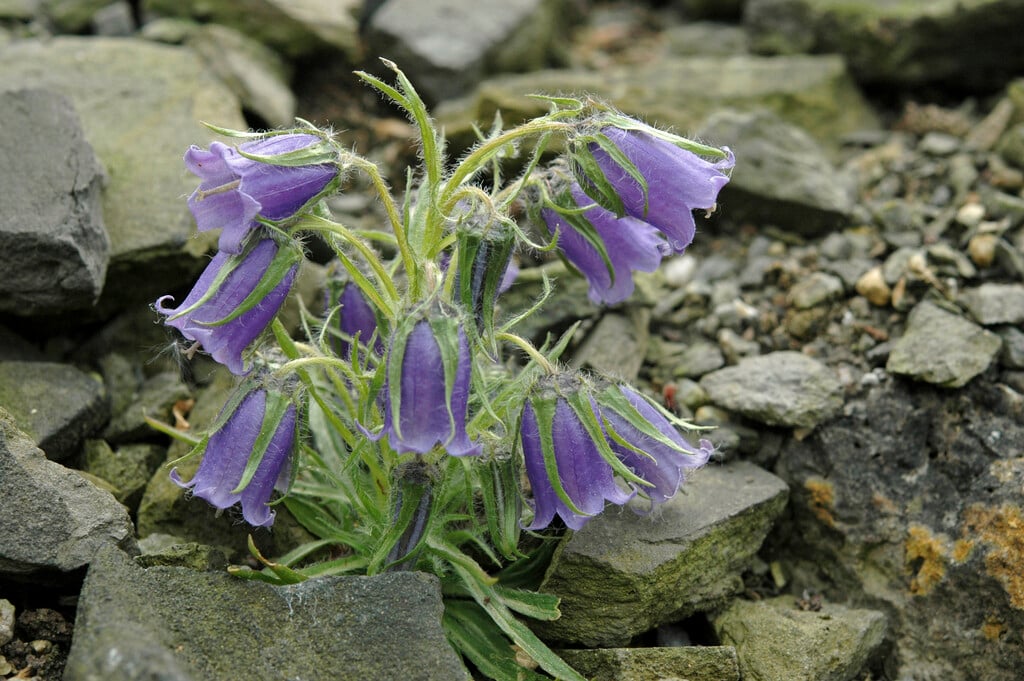
Campanula alpina

RHS Plant Profile
alpine bellflower
alpine bellflower visionspictures.com

Other common names

alpine harebell

Annual Biennial Alpine Rockery

A low-growing perennial with small, green, oval-shaped foliage and racemes of nodding, outward facing, pale blue, bell-shaped single flowers borne on short stalks sitting just above its foliage providing a long flowering display in summer. An easy to grow plant that dislikes wet winters.

Position

Full sun, Partial shade

Soil Types

Loam, Sand

Max Height

0.1-0.5 metres

Max Spread

0.1-0.5 metres

Size

Time to Maturity
2–5 years
Max Spread
0.1-0.5 metres
Max Height
0.1-0.5 metres

Growing Conditions

Loam Sand
Moisture
Moist but well–drained
pH
Alkaline or Neutral

Position

Full sun Partial shade
Aspect
East–facing or North–facing or South–facing or West–facing
Exposure
Exposed or Sheltered
Hardiness
H5

Colour & Scent

Season Stem Flower Foliage Fruit
Spring
Summer
Autumn
Winter

Botanical Details

Family
Campanulaceae
Native to GB/Ireland
No
Foliage
Deciduous
Habit
Matforming
Genus
Campanula may be annuals, herbaceous or evergreen perennials, with bell or star-shaped, often blue, flowers in late spring or summer
Name Status
Correct

How to Grow

Cultivation

Will grow well in well-drained soil preferably in full sun to partial shade avoiding wet winter conditions. Easy to grow in containers.

Propagation

Propagate by division in spring or autumn and by basal cuttings in spring

Suggested planting locations and garden types

  • Rock garden
  • Cottage and informal garden
  • Patio and container plants
  • Garden edging
  • Flower borders and beds

Pruning

Cut back after flowering to promote extended blooms

Pests

May be susceptible to slugs and snails

Diseases

May be susceptible to a rust, powdery mildews and leaf spot