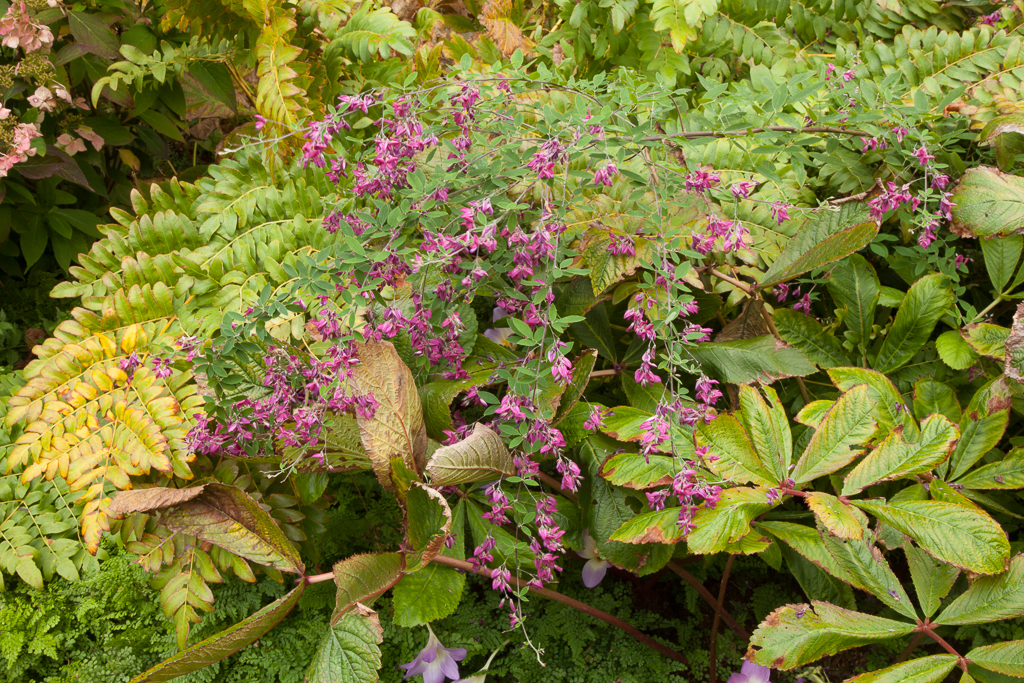
Lespedeza thunbergii subsp. thunbergii

<em>Lespedeza</em> <em>thunbergii</em> subsp. <em>thunbergii</em> John Fielding
Award of Garden Merit
Shrubs

A woody-based, deciduous sub-shrub to 2m tall, annually producing long, arching shoots and leaves composed of three oval leaflets. In late summer and early autumn it bears clusters of dark pink flowers

Position

Full sun

Soil Types

Chalk, Loam, Sand

Max Height

1.5-2.5 metres

Max Spread

1-1.5 metres

Size

Time to Maturity
2–5 years
Max Spread
1-1.5 metres
Max Height
1.5-2.5 metres

Growing Conditions

Chalk Loam Sand
Moisture
Moist but well–drained
pH
Acid or Alkaline or Neutral

Position

Full sun
Aspect
East–facing or South–facing or West–facing
Exposure
Exposed or Sheltered
Hardiness
H5
Drought Resistance
Yes

Colour & Scent

Season Stem Flower Foliage Fruit
Spring
Summer
Autumn
Winter

Botanical Details

Family
Fabaceae
Native to GB/Ireland
No
Foliage
Deciduous
Habit
Bushy
Genus
Lespedeza can be perennials, deciduous subshrubs or annuals, with neat leaves composed of 3 leaflets, and axillary or terminal racemes of small, pea-shaped flowers
Name Status
Correct
Plant Range
N. China, Japan

How to Grow

Cultivation

Grow in light, well-drained soil in full sun

Propagation

Propagate by seed, division and semi-hardwood cuttings

Suggested planting locations and garden types

  • Cottage and informal garden
  • Gravel garden
  • Mediterranean climate plants
  • Wildlife gardens
  • Architectural
  • Low Maintenance
  • Climber and wall shrubs
  • Flower borders and beds
  • Wall side borders
  • Banks and slopes

Pruning

Pruning group 6

Pests

Generally pest-free

Diseases

Generally disease-free