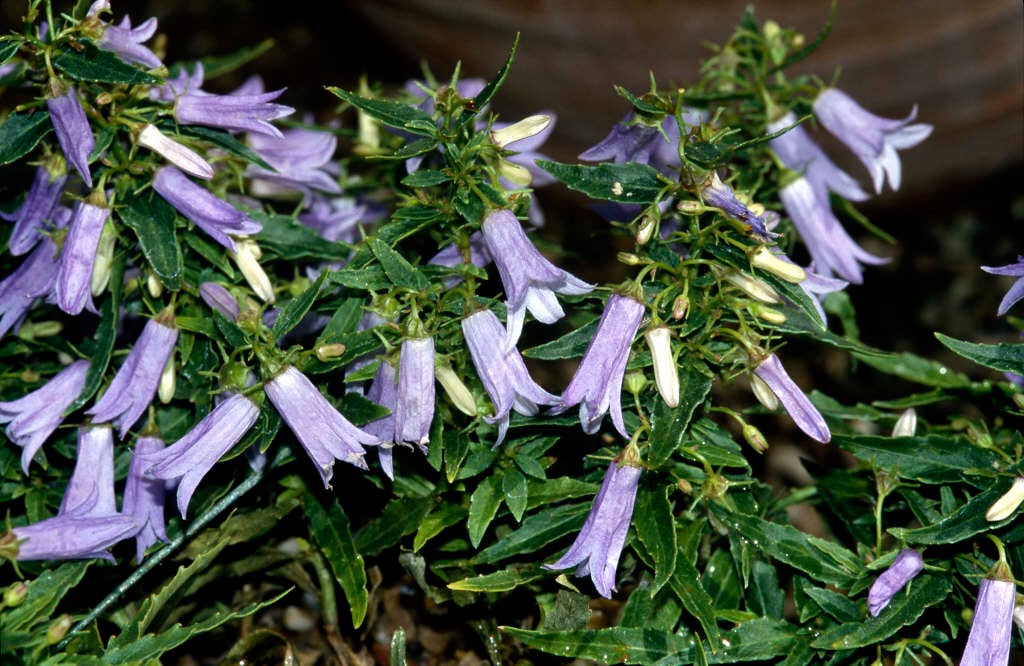
Campanula tommasiniana

RHS Plant Profile
Tommasini bell flower
Tommasini bell flower RHS
Award of Garden MeritPlants for pollinators
Alpine Rockery Herbaceous Perennial

A compact perennial forming a clump to 10cm tall, with nodding, narrowly bell-shaped, light blue flowers 2cm long on erect, leafy stems

Position

Full sun, Partial shade

Soil Types

Chalk, Loam, Sand

Max Height

Up to 10 cm

Max Spread

0-0.1 metre

Size

Time to Maturity
1–2 years
Max Spread
0-0.1 metre
Max Height
Up to 10 cm

Growing Conditions

Chalk Loam Sand
Moisture
Well–drained
pH
Acid or Alkaline or Neutral

Position

Full sun Partial shade
Aspect
South–facing or West–facing or North–facing or East–facing
Exposure
Exposed or Sheltered
Hardiness
H5

Colour & Scent

Season Stem Flower Foliage Fruit
Spring
Summer
Autumn
Winter

Botanical Details

Family
Campanulaceae
Native to GB/Ireland
No
Foliage
Deciduous
Habit
Bushy
Genus
Campanula may be annuals, herbaceous or evergreen perennials, with bell or star-shaped, often blue, flowers in late spring or summer
Name Status
Correct
Plant Range
Croatia

How to Grow

Cultivation

Grow in gritty, moist but sharply drained soil in full sun. Suits a scree bed trough or alpine house in peat-free, loam-based potting compost with plenty of grit. Ideal for sunny wall or rock crevice planting

Propagation

Propagate by seed in containers in an open cold frame in autumn. Take cuttings of new growth in early spring or summer

Suggested planting locations and garden types

  • City and courtyard gardens
  • Cottage and informal garden
  • Rock garden
  • Gravel garden
  • Patio and container plants
  • Wildlife gardens
  • Banks and slopes
  • Garden edging

Pruning

No pruning required

Pests

vine weevil may be a problem under glass. Vulnerable to slugs and snails

Diseases

Powdery mildew may be problematic