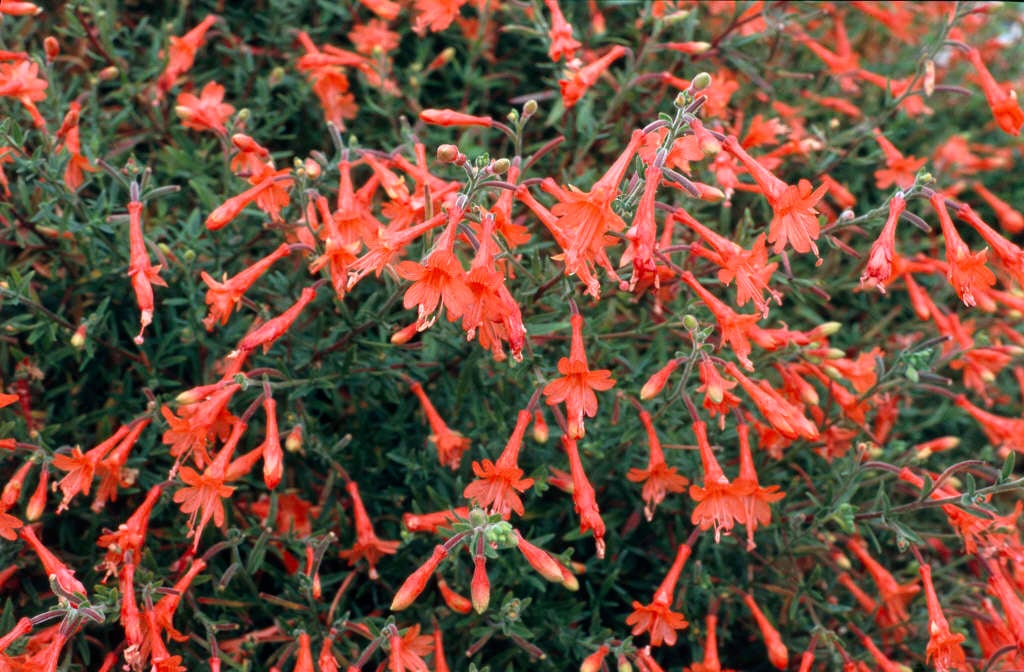
Epilobium canum 'Dublin' (Z)

RHS Plant Profile
California fuchsia 'Dublin'
California fuchsia 'Dublin' RHS 2002

Synonyms

Zauschneria californica 'Dublin'
Zauschneria 'Glasnevin'
Zauschneria californica 'Glasnevin'
Zauschneria cana 'Dublin'
Epilobium canum 'Glasnevin'

Award of Garden MeritPlants for pollinators
Alpine Rockery Shrubs

'Dublin' is a spreading, deciduous dwarf sub-shrub to 25cm in height, with narrowly lance-shaped, grey-green leaves and loose terminal spikes of brilliant scarlet tubular flowers 4cm in length in late summer and early autumn

Position

Full sun

Soil Types

Chalk, Loam, Sand

Max Height

0.1-0.5 metres

Max Spread

0.1-0.5 metres

Size

Time to Maturity
2–5 years
Max Spread
0.1-0.5 metres
Max Height
0.1-0.5 metres

Growing Conditions

Chalk Loam Sand
Moisture
Well–drained
pH
Acid or Alkaline or Neutral

Position

Full sun
Aspect
South–facing or West–facing
Exposure
Sheltered
Hardiness
H4

Colour & Scent

Season Stem Flower Foliage Fruit
Spring
Summer
Autumn
Winter

Botanical Details

Family
Onagraceae
Native to GB/Ireland
No
Foliage
Deciduous
Habit
Bushy
Genus
Epilobium can be annuals or perennials, sometimes invasive, with erect stems bearing willowy leaves and showy, 4-petalled flowers in terminal racemes
Name Status
Accepted
Horticultural Group
Formerly known as Zauschneria

How to Grow

Cultivation

Easy to grow in sheltered, well-drained beds, especially raised beds and in walls, where there is full sun all day

Propagation

Propagate by seed, softwood cuttings or division

Suggested planting locations and garden types

  • Gravel garden
  • Rock garden
  • Patio and container plants
  • City and courtyard gardens
  • Coastal
  • Cottage and informal garden
  • Wildlife gardens

Pruning

Pruning not normally needed, cut back to rootstock in spring to renovate

Pests

May be susceptible to slug damage on young leaves

Diseases

Generally disease-free